Understanding the hatha yoga vs ashtanga yoga difference is essential before selecting a teacher training program or establishing a sustainable daily sadhana. While both disciplines stem from classical Vedic roots, practitioners often struggle to choose between Hatha’s static alignment holds and Ashtanga’s vigorous, heat-building Vinyasa sequences.
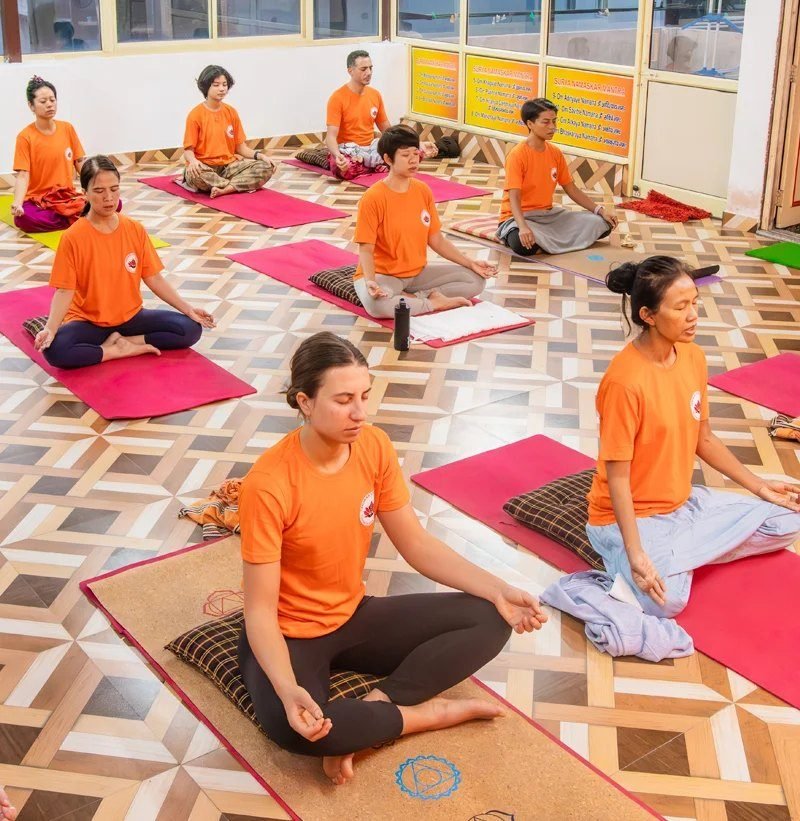
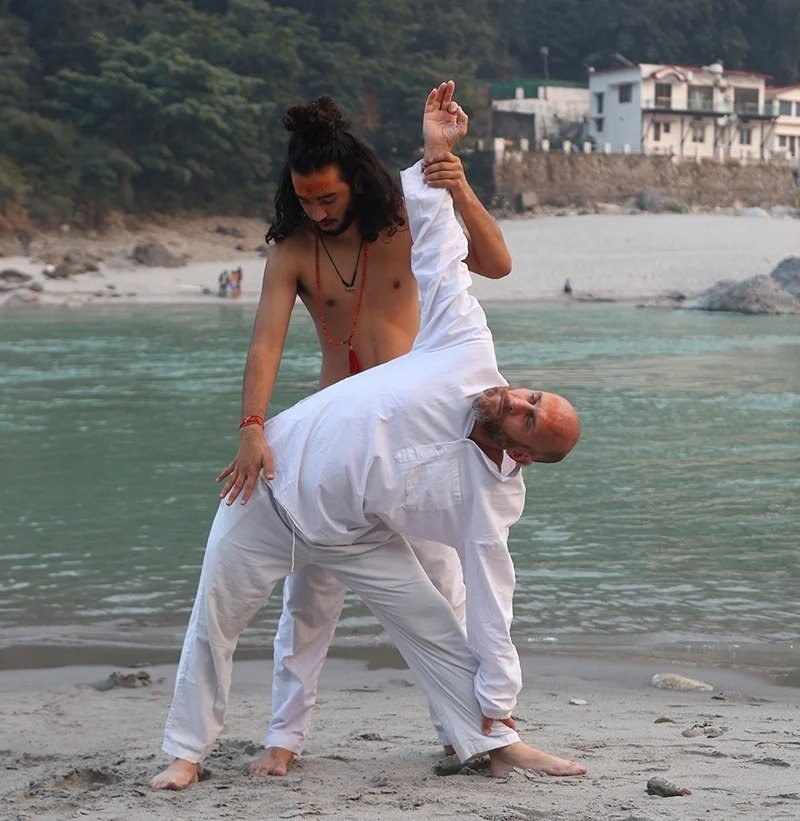
At Sanskar Yogashala, guided by Yog Guru Naveen Joshi (M.Sc. in Yogic Science), we teach both lineages within their traditional Gurukul context. Across our 28-day immersions accredited by Yoga Alliance USA Standards and strictly limited to 15 students per cohort, trainees practice Hatha joint stabilization at dawn and dynamic Ashtanga Tristhana sequencing at dusk along the sacred Ganges in Tapovan, Rishikesh.
Key Takeaways
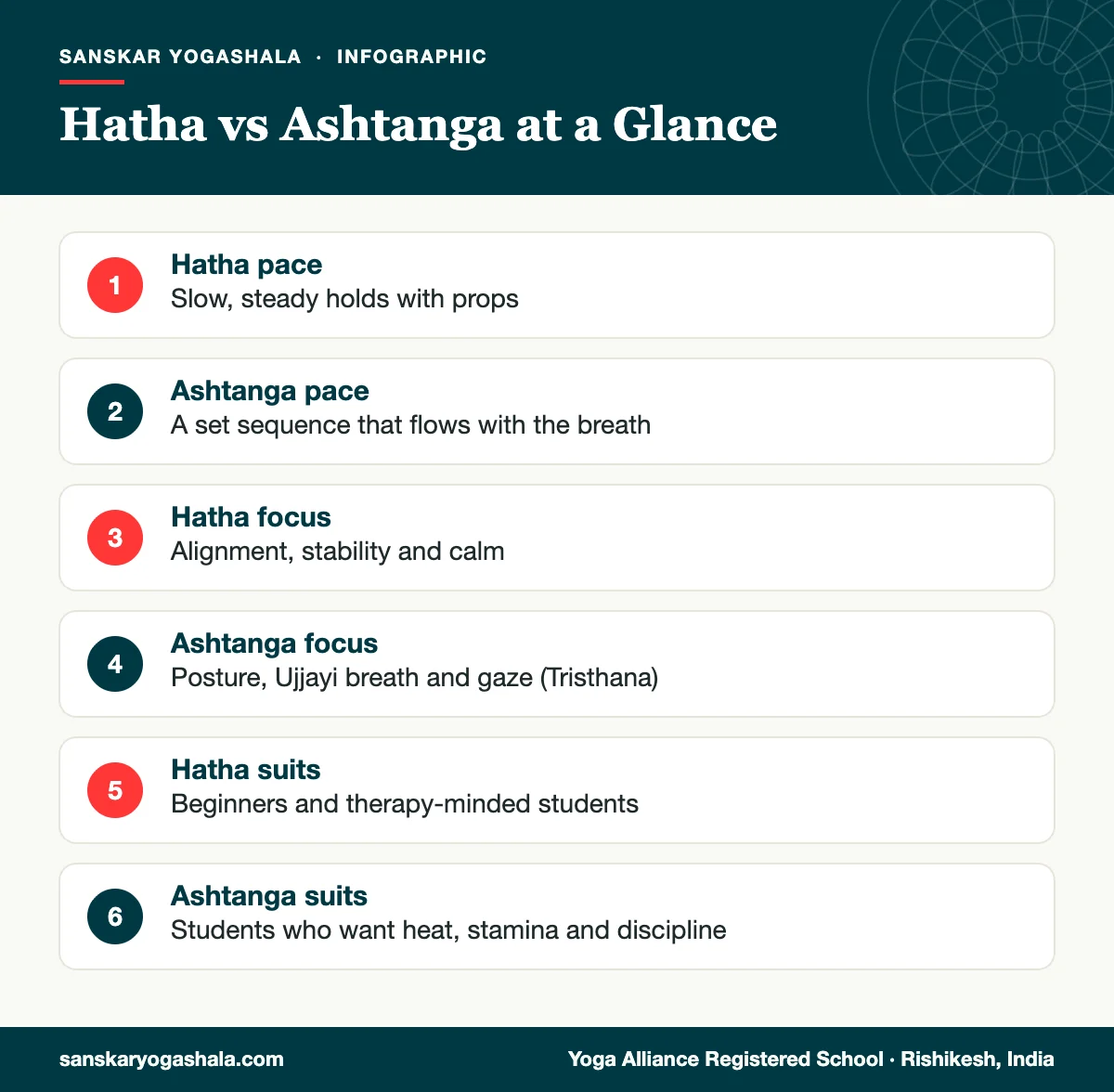
- Pacing and Static Holds: Traditional Hatha yoga emphasizes deliberate, unhurried posture holds lasting 5 to 10 conscious breaths, whereas Ashtanga yoga utilizes continuous, breath-synchronized vinyasa flows connecting each posture.
- Sequence Structure: Ashtanga follows an unvarying, predetermined sequence of postures (Primary Series / Yoga Chikitsa), while Hatha allows instructors to customize posture themes to target specific anatomical or energetic needs.
- Breath and Internal Locks: Ashtanga relies on the continuous application of Ujjayi pranayama, Mula Bandha, Uddiyana Bandha, and Drishti (Tristhana). Hatha utilizes distinct breath retentions (Kumbhaka) and Shatkarma kriyas practiced separately.
- Physiological Adaptations: According to NCBI clinical research on yoga systems, static Hatha holds maximize parasympathetic vagal recovery and joint stability, whereas Ashtanga stimulates cardiovascular metabolic rate and myofascial heat.
- Integrated Gurukul Curriculum: Sanskar Yogashala unites both systems in our 200-hour residential program, giving teachers biomechanical precision in Hatha alignment and dynamic stamina in Ashtanga sequencing.
Historical Roots and Philosophical Foundations
To understand how these two practices diverge on the mat, practitioners must first examine their scriptural sources and energetic intentions.
The Classical Lineage of Traditional Hatha Yoga
Classical Hatha Yoga emerged between the 11th and 15th centuries CE as an esoteric physical discipline designed to prepare the human organism for higher Raja Yoga meditation. The seminal text, Hatha Yoga Pradipika, authored by Swami Swatmarama, codifies asana, pranayama, mudra, and bandha as mechanical tools to harmonize the dual energetic polarities within the body.
- Etymological Meaning: “Ha” signifies the solar, active, heating prana channeled through the Pingala nadi. “Tha” represents the lunar, receptive, cooling prana flowing through the Ida nadi.
- Primary Spiritual Objective: Balancing solar and lunar energetic flows forces vital life force into the central Sushumna nadi, naturally dissolving mental agitation.
- Shatkarma Cleansing Foundation: Traditional Hatha establishes physical purification (Neti, Dhauti, Nauli, Basti, Kapalbhati, Trataka) as mandatory prerequisites before attempting advanced asana.
- Non-Dogmatic Pacing: Prioritizes individual anatomical safety, spinal elongation, and conscious diaphragmatic awareness over rapid kinetic speed.
The Modern Lineage of Ashtanga Vinyasa Yoga
Ashtanga Vinyasa Yoga was developed and popularized in Mysore, South India, during the 20th century by Tirumalai Krishnamacharya and his student K. Pattabhi Jois. Grounded in the ancient philosophy of Patanjali’s eight-limbed Ashtanga path, this system translates internal discipline into an athletic, unbroken moving meditation.
- Yoga Chikitsa Foundation: The Primary Series is specifically termed “Yoga Chikitsa” (Yoga Therapy), engineered to realign the spine, detoxify internal organs, and build core heat.
- Vinyasa Krama Principle: Every movement is anchored to a specific inhalation or exhalation, producing uninterrupted kinetic transitions between static postures.
- Tapas and Internal Heat: Intense continuous exertion generates internal heat (Agni), thinning the blood and expelling impurities through active perspiration.
- Rigid Structural Discipline: Students master each posture sequentially, earning permission from the guru to advance only after establishing stable proficiency.
For a deeper examination of how classical Indian lineages preserve authentic sadhana, review our dedicated guide to traditional hatha yoga in rishikesh.
Comprehensive Comparison: Traditional Hatha vs. Ashtanga Yoga
The operational matrix below contrasts every practical dimension of practicing and teaching Hatha versus Ashtanga yoga:
| Practice Dimension | Traditional Hatha Yoga | Ashtanga Vinyasa Yoga |
|---|---|---|
| Historical Scripture | Hatha Yoga Pradipika, Gheranda Samhita, Shiva Samhita (15th Century CE) | Yoga Korunta, Patanjali Yoga Sutras as codified by K. Pattabhi Jois (20th Century) |
| Movement Cadence | Static, deliberate holds (30 to 90 seconds per asana with conscious breath) | Dynamic, continuous vinyasa flow connecting postures with minimal pause |
| Sequence Structure | Flexible and adaptive; customized by the teacher to address body imbalances | Strict, immutable fixed sequence (Primary, Intermediate, Advanced Series) |
| Breath Methodology | Diaphragmatic breathing; separate dedicated pranayama and Kumbhaka holds | Continuous Ujjayi pranayama synchronized with every vinyasa transition |
| Energetic Locks & Gaze | Bandhas applied deliberately during pranayama and specific static postures | Continuous Tristhana: simultaneous Asana, Drishti (9 focal points), and Bandhas |
| Use of Props | Extensive use of wooden blocks, cotton straps, bolsters, and wall ropes | Traditional practice discourages props; modifications are earned progressively |
| Primary Physiological Benefit | Parasympathetic vagal tone, joint stabilization, myofascial release, reduced cortisol | Cardiovascular stamina, core stability, internal heat, intense muscle tone |
| Atmosphere & Class Format | Unhurried, meditative, instructional; individual posture adjustments | Mysore self-practice format or Sanskrit-counted led classes (Ekam, Dve…) |
Asana Mechanics: Static Stability vs. Kinetic Heat
The physical mechanics of each system demand completely different muscular and neuro-respiratory adaptations.
Anatomical Precision in Traditional Hatha
In a traditional Hatha practice, asanas are explored as self-contained laboratories of consciousness. Practitioners dissect joint angles, bone stacking, and pelvic symmetry before settling into prolonged holds.
- Skeletal Stacking: Aligning joints vertically (ankle over knee, knee over hip) minimizes muscular strain, allowing connective tissues and ligaments to strengthen safely.
- Myofascial Plasticity: Holding postures beyond 60 seconds triggers autogenic inhibition in the Golgi tendon organs, allowing stubborn fascial sheaths to lengthen without injury.
- Neuromuscular Calming: Unrushed transitions prevent sympathetic nervous system spikes, maintaining steady blood pressure and heart rate variability.
The Tristhana Method in Ashtanga Vinyasa
Ashtanga transforms posture into kinetic meditation through the rigorous synchronization of three focal pillars known as Tristhana:
- 1. Asana (Posture & Bandha): The physical form coupled with continuous activation of Mula Bandha (pelvic floor contraction) and Uddiyana Bandha (navel drawing inward) to support the lumbar spine.
- 2. Drishti (Gazing Point): Anchoring ocular focus to one of nine designated points (such as the tip of the nose, third eye, or navel) to eliminate visual distraction and quiet the cerebral cortex.
- 3. Ujjayi Pranayama (Victorious Breath): A resonant, even friction breath produced through mild glottic contraction, maintaining internal core temperature and regulating respiratory rhythm.
To see how anatomical alignment transforms advanced postures, explore our curriculum breakdown for the 300 hour yoga teacher training in rishikesh.
How Sanskar Yogashala Unites Both Traditions Daily
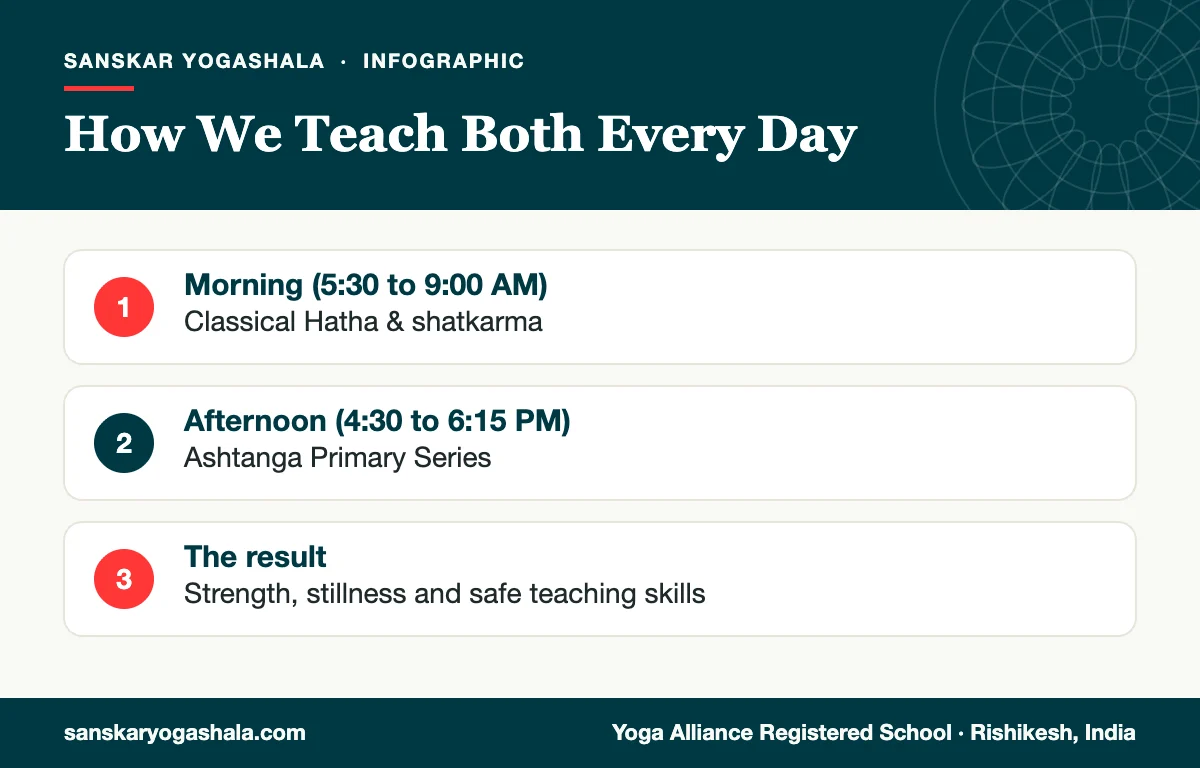
Rather than treating Hatha and Ashtanga as competing dogmas, authentic Himalayan ashrams recognize them as mutually reinforcing dimensions of classical yoga. At Sanskar Yogashala, our 28-day residential schedule balances both methodologies to cultivate complete teachers:
Morning Sadhana: Classical Hatha & Shatkarma (05:30 AM – 09:00 AM)
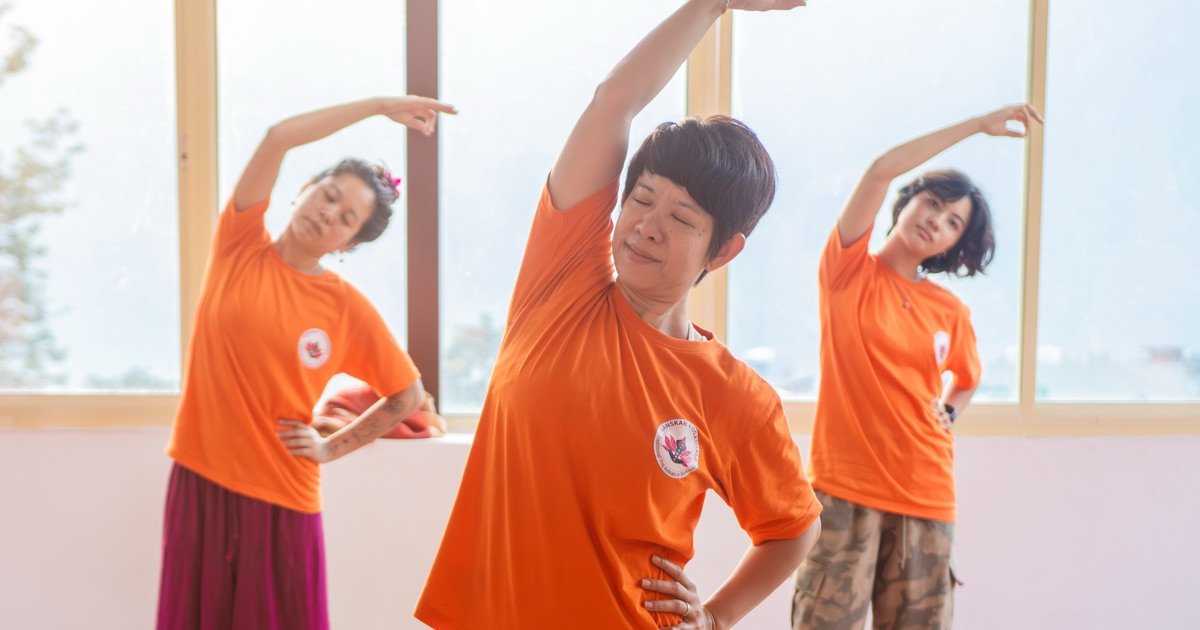
The dawn hours belong to stillness and purification. Students begin with nasal Shatkarma (Jala Neti), followed by classical pranayama and two hours of deep Hatha asana alignment. The body awakens through unhurried static holds, developing structural stability without muscular shock.
Afternoon Clinic: Dynamic Ashtanga Primary Series (04:30 PM – 06:15 PM)
As the body warms through the afternoon, students transition to the dynamic Ashtanga Primary Series. Here, trainees apply the anatomical alignment mastered in the morning to brisk vinyasa flows, mastering hands-on adjustments and building stamina along the sacred Ganges.
- 05:30 AM – 06:00 AM: Herbal tea and morning Shatkarma (Jala Neti nasal cleansing).
- 06:00 AM – 07:00 AM: Pranayama breath control, Bandhas, and Vedic mantra chanting.
- 07:00 AM – 08:45 AM: Traditional Hatha Yoga (Precision Postural Biomechanics & Alignment).
- 08:45 AM – 10:00 AM: Ayurvedic breakfast and mindful rest.
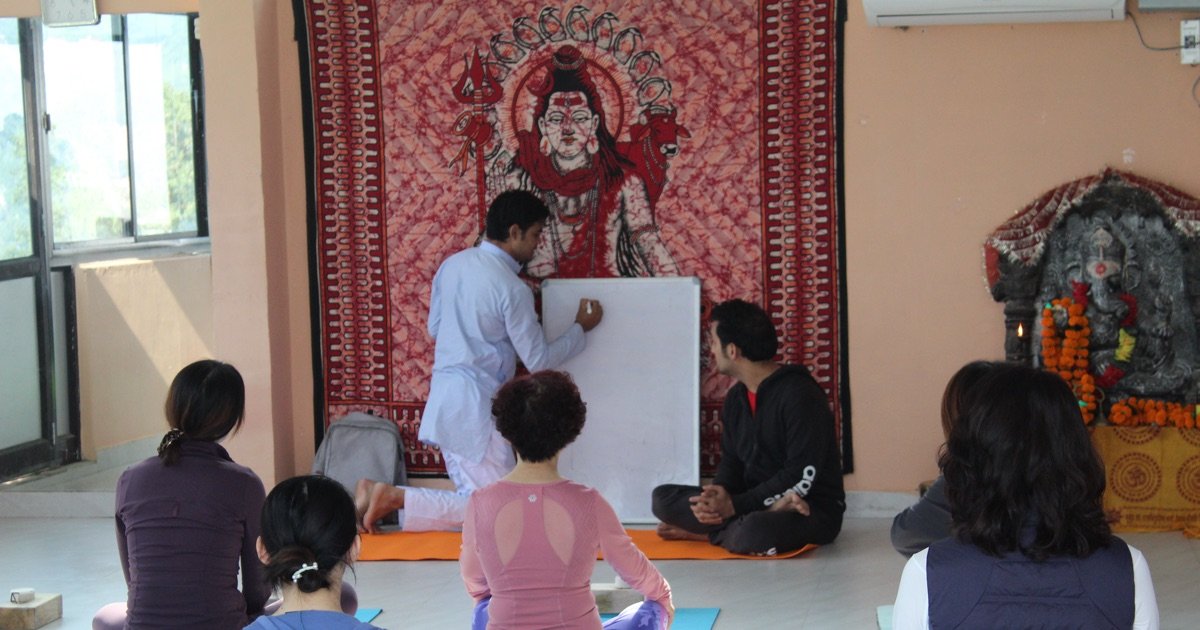
- 10:00 AM – 01:00 PM: Academic lecture modules: Patanjali Yoga Sutras, Gita philosophy, and functional anatomy.
- 01:00 PM – 03:00 PM: Sattvic Ayurvedic lunch and personal self-study (Svadhyaya).
- 03:00 PM – 04:15 PM: Asana Alignment Clinic & Hands-On Posture Adjustment Workshops.
- 04:30 PM – 06:15 PM: Dynamic Ashtanga Vinyasa Primary Series (Mysore-Style & Sanskrit Led).
- 06:30 PM – 07:30 PM: Guided meditation, Yoga Nidra, and breath reflection.
- 07:30 PM – 08:30 PM: Sattvic vegetarian dinner and community Satsang.
Prospective practitioners can review the complete ashram environment on our ashram accommodation in rishikesh portal, or explore our foundational 100 hour yoga teacher training in rishikesh for modular study.
Decision Framework: Which Style Matches Your Personal Goals?
Choosing your primary practice requires an honest assessment of your physical constitution, injury history, and long-term intentions.
You Should Focus on Traditional Hatha Yoga If:
- You are rebuilding from physical injuries: The slow pace and prop integration make Hatha ideal for rehabilitating spinal, knee, or shoulder imbalances.
- You suffer from high chronic stress or anxiety: Prolonged static holds stimulate the parasympathetic nervous system, lowering cortisol and regulating blood pressure.
- You want to understand anatomical alignment deeply: Hatha provides the mental space to study muscular activation, skeletal geometry, and pelvic positioning.
- You prefer an introspective, meditative practice: The lack of rapid movement allows the mind to enter deep contemplation without physical exhaustion.
You Should Focus on Ashtanga Vinyasa Yoga If:
- You seek athletic conditioning and physical stamina: Ashtanga builds upper-body power, core stability, and cardiovascular endurance through repetitive sun salutations and jump-backs.
- You thrive on routine and daily structure: The fixed sequence provides a clear metric of progress, showing tangible physical growth over weeks and months.
- You need intense physical focus to quiet mental chatter: The demanding coordination of breath, gazing points, and bandhas leaves zero mental bandwidth for outside distraction.
- You plan to teach commercial studio Vinyasa classes: Ashtanga provides the foundational sequencing vocabulary upon which modern Vinyasa and Power yoga classes are built.
For students seeking advanced spiritual energy awakening beyond physical forms, explore our comprehensive guide on kundalini yoga teacher training in rishikesh, or explore relaxing wellness options on our yoga retreats in india directory.
Frequently Asked Questions (FAQ)
Is Hatha yoga easier than Ashtanga yoga?
Hatha yoga is generally more accessible for beginners due to its slower pace and use of props, but holding postures for extended durations demands significant muscular endurance and mental stillness. Ashtanga is more cardiovascularly demanding and physically strenuous from day one.
Can a complete beginner start with Ashtanga yoga?
Yes, provided they begin within a traditional Mysore-style room where a certified master guides them through one posture at a time. However, learning foundational alignment in Hatha first helps beginners avoid joint strain during rapid vinyasa transitions.
Which style is better for weight loss and cardiovascular fitness?
Ashtanga yoga burns more calories and elevates heart rate due to continuous vinyasa movements and dynamic jump-backs. Hatha yoga builds lean functional muscle and optimizes hormonal balance by reducing cortisol.
Are both Hatha and Ashtanga taught in Sanskar Yogashala’s 200-hour YTTC?
Yes. Our Yoga Alliance certified 200-hour curriculum dedicates morning hours to traditional Hatha alignment and anatomical precision, and afternoon hours to dynamic Ashtanga Vinyasa Primary Series sequencing.
What is the main difference in breathing between Hatha and Ashtanga?
Ashtanga requires uninterrupted Ujjayi breathing with throat friction throughout every movement. Hatha utilizes normal diaphragmatic breathing during posture holds, reserving dedicated pranayama techniques like Nadi Shodhana and Kapalbhati for seated practice.
Do I need to master the entire Ashtanga Primary Series before enrolling in a teacher training?
No. A foundational 200-hour training is designed to break down the primary series methodically. Dedicated practice and willingness to learn are far more important than advanced physical flexibility.
Which style is more spiritual: Hatha or Ashtanga?
Both styles are deeply spiritual paths. Hatha focuses on balancing the solar and lunar pranic currents to prepare for Raja Yoga meditation. Ashtanga utilizes physical movement as tapas (purification) to quiet mental fluctuations through focused gazing and breath.
Master Both Lineages at Sanskar Yogashala
Experience the perfect harmony of classical Hatha alignment and dynamic Ashtanga flow under native Indian masters. With our intimate cohorts strictly capped at 15 students, you receive personal adjustments every single day:
- Explore Comprehensive Curriculum: Review our balanced module breakdown on the 200 hour yoga teacher training in rishikesh course overview.
- Meet Our Master Faculty: Learn about Yog Guru Naveen Joshi and our university-trained instructors on the yoga teachers in rishikesh directory.
- International Programs: Looking to train in a tropical sanctuary? Explore our yoga teacher training in thailand led by our native Indian faculty.
- Reserve Your Seat: Batches fill months in advance. Secure your place by submitting our online enrollment portal.
- Direct Admissions Desk: Connect with our team for syllabus counseling via WhatsApp at +91-8477003150 or email us at sanskaryogashala@gmail.com.