Paschimottanasana, or Seated Forward Bend, is a classic yoga pose in which you sit with legs straight and fold forward over them. It stretches the whole back of the body, from the heels to the neck, calms the mind and supports digestion. It is one of the key poses of Hatha yoga.
The Paschimottanasana is an advanced posture which the yogic practitioners frequently practice as it is believed and visualized that it helps and aids incomplete realization of the third chakra ( navel chakra). The posture needs to be done only when the practitioner has advanced to a good level of flexibility Paschimottanasana yoga. Let us see the steps of practicing the intense dorsal stretch.

Step-by-Step Instructions Paschimottanasana
- Step 1. Start from the sit-up seated position( i.e. your legs stretched out rest on the ground while your upper body sits up making an angle of 90 degrees).
- Step 2. With both your ankles together and feet joined stretch out your arms straight and then move forward with your upper body to reach for the feet.
- Step 3. With both your arms you must reach and grasp both the soles of your feet completely. Doing so the upper body has now moved completely parallel to the resting stretched out legs.
- Step 4. Now finally once the legs have been grasped completely move your upper body including your head straight down so that the upper body now completely relaxes on the stretched-out legs.
- Step 5. Your face finds it’s placed within the folds of your legs somewhere near both the knees while the stretched out palms grasping the feet completely embrace the feet and your spine is completely stretched out while your upper body has moved 90 degrees complete to now lie down with your legs.
- Step 6. Stay in this posture for a few breathing cycles and then slowly and steadily come out of it. Coming back to the same position from where you started. Relax.

Health Benefits of Paschimottanasana:
- 1. A complete cleansing posture for your stomach and intestine. This posture has been aimed at realizing the navel chakra ( MANIPUR) which is related to digestive fire and intestinal organs.
- 2. For anyone suffering from or facing VAAT(gaseous) problems of the stomach and intestine, this posture acts as an immediate reliever.
- 3. Cleanses and stretches your urinary system as a whole. An important detoxification posture.
- 4. With improvised practice moves your kundalini up from the third chakra and so on.
- 5. Makes the back and the legs very flexible over a period of time.
- 6. It is good for diabetic patients.

Precautions:
- 1. Make sure the movements and motions are fluid. Any mal-practice can cause muscular problems of the abdomen.
- 2. Don’t attempt this posture if you lack the core strength and flexibility of the upper torso and spine.
- 3. Attempt the posture under the guidance of a teacher. Once perfected can practice on your own.
- 4. In the case of lower back problems or even jitteriness and weakness of body first practice beginners postures.
Paschimottanasana Meaning
The name comes from Sanskrit: paschima means west (the back of the body), uttana means intense stretch and asana means pose. So it is the intense stretch of the back side of the body.
Benefits of Seated Forward Bend
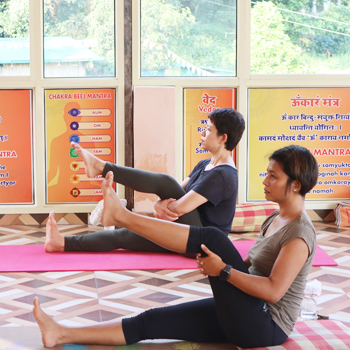
- Stretches the hamstrings, calves and spine
- Calms the nervous system and reduces stress
- Massages the abdominal organs and supports digestion
- Helps relieve mild anxiety and tiredness
- Prepares the body for meditation
Tips for a Safe Forward Bend
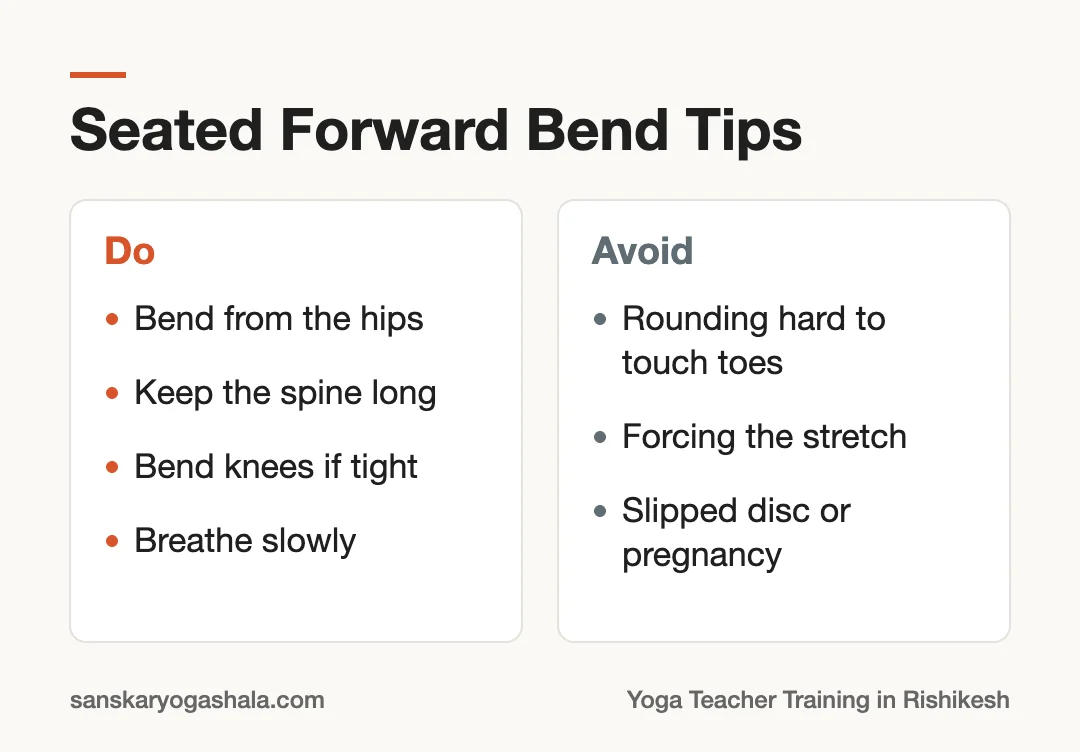
- Bend from the hips, not from the waist.
- Keep the spine long rather than rounding to touch the toes.
- Bend the knees or sit on a folded blanket if the hamstrings are tight.
- Use a strap around the feet.
- Breathe slowly and relax a little deeper on each exhale.
Precautions
Avoid deep folding with a slipped disc, recent back injury or during pregnancy. Balance this pose with backbends like Cobra Pose, and learn safe alignment from experienced teachers in a Hatha yoga course in Rishikesh.
Try these poses next: Bhujangasana (Cobra Pose) and read about Hatha yoga in Rishikesh. You can learn asana alignment in depth on our 200 Hour Yoga Teacher Training in Rishikesh.
Paschimottanasana FAQs
What is Paschimottanasana in English?
It is called Seated Forward Bend in English.
What are the benefits of Paschimottanasana?
It stretches the back of the body, calms the mind, supports digestion and relieves stress.
What if I cannot touch my toes?
That is fine. Bend the knees, use a strap and focus on a long spine rather than reaching the toes.
How long should I hold Seated Forward Bend?
Hold it for 30 seconds to 2 minutes with slow breathing.
Who should avoid Paschimottanasana?
People with slipped discs, serious back injuries or pregnancy should avoid deep forward bends.