The Science of Sound: Why Mantra Chanting is Essential in Traditional Hatha Yoga
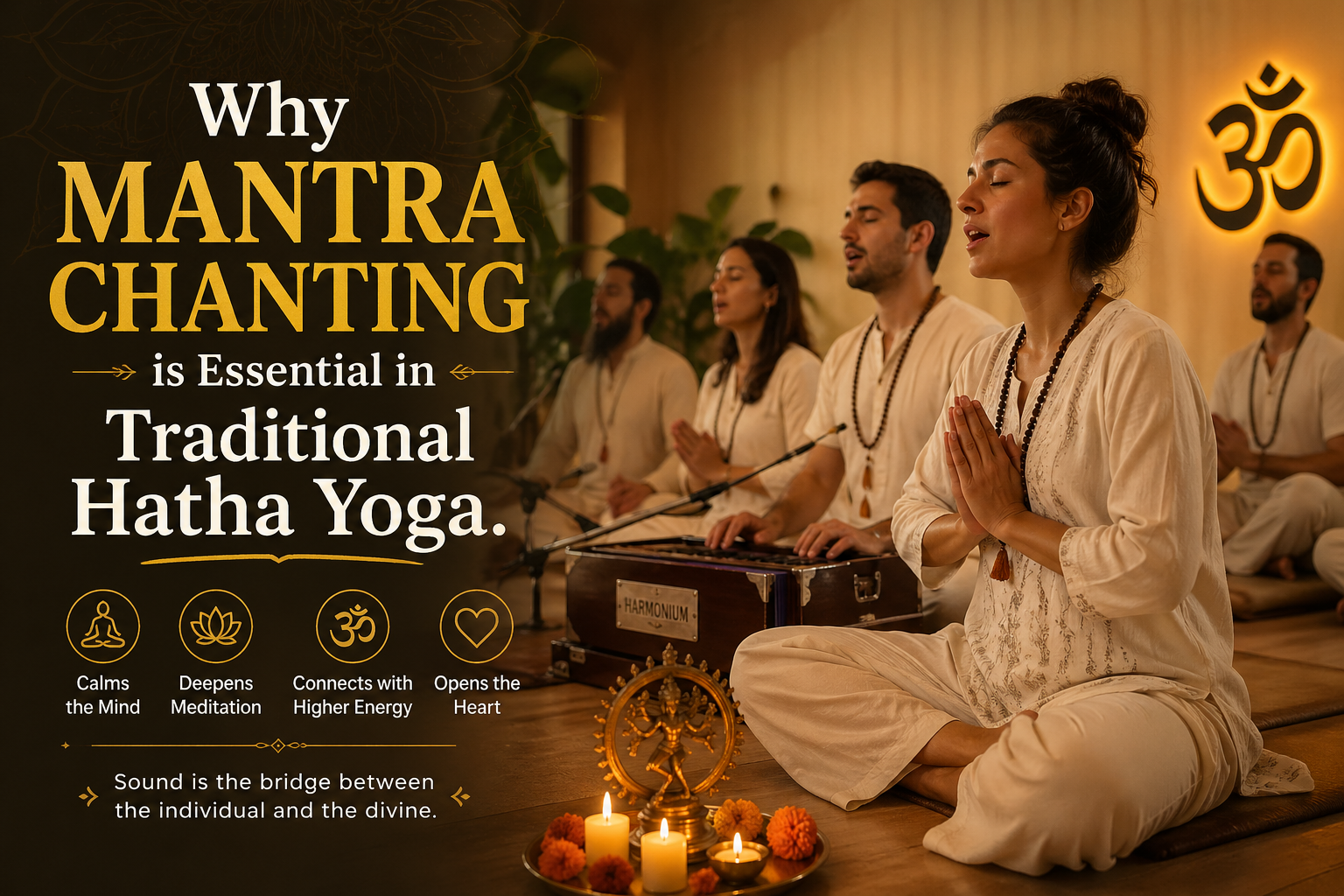
In the modern fitness-centric view of Yoga, Hatha is often reduced to physical postures (asanas) and stretching. However, step into a Traditional Yoga Shala in the heart of Rishikesh, and the first thing that greets you isn’t the sound of heavy breathing—it is the resonance of ancient Sanskrit mantras.
At Sanskar Yogashala, we believe that Hatha Yoga is an integrated system of purification. While asanas purify the body and pranayama purifies the breath, Mantra Chanting is the essential tool for purifying the mind and spirit.

What is a Mantra? Understanding the Etymology
To understand why we chant, we must first look at the word itself. “Mantra” is derived from two Sanskrit roots: Manas (mind) and Tra (tool or liberation). Literally translated, a mantra is a “tool to transport the mind” from a state of scattered thoughts to a state of concentrated stillness.
In Traditional Hatha Yoga, a mantra is not just a prayer; it is a precise sound frequency. These are ancient formulas discovered by Rishis (seers) who understood that the entire universe is in a state of vibration.
1. Creating the Sacred Space: The Ritual of Opening
Traditional Hatha Yoga sessions always begin with a mantra, such as the Ganesha Mantra or the Guru Stotram. This serves a functional purpose in SEO-friendly “Intentional Living”:
- Transitioning the Mind: Chanting signals to the nervous system that the “mundane” part of the day is over and the “sacred” practice has begun.
- Invoking Lineage: It connects the practitioner to the thousands of years of teachers who have come before, grounding the practice in authenticity rather than just physical exercise.
2. The Vibrational Science of the Human Body
Why do we feel a “buzz” after chanting Om? Science is finally catching up to what Hatha Yoga has taught for millennia. Everything in our body—our cells, our organs, our thoughts—vibrates at specific frequencies.
When we chant during Hatha Yoga, we create a physical resonance in the chest, throat, and skull. These vibrations stimulate the Vagus Nerve, the primary component of the parasympathetic nervous system. This is why chanting immediately lowers the heart rate and reduces cortisol levels, preparing the body for deeper asana and meditation practice.
3. Mantra as a Tool for Breath Control (Pranayama)
In Hatha Yoga, the breath is the bridge between the body and the mind. Chanting is, in its simplest form, a highly controlled method of exhalation.
When you chant a long mantra like the Mahamrityunjaya Mantra, you are forced to regulate your breath, extending the exhale and slowing the heart rate. This naturally transitions the practitioner into a state of Pratyahara (withdrawal of the senses), making the subsequent physical practice more mindful and less reactive.
4. Aligning the Chakras and Nadis
Traditional Hatha Yoga is deeply concerned with the “Subtle Body”—the system of 72,000 Nadis (energy channels) and the 7 Chakras (energy centers).
Each Chakra has a “Bija” (Seed) mantra associated with it:
- Lam for the Root (Muladhara)
- Vam for the Sacral (Svadhisthana)
- Ram for the Solar Plexus (Manipura)
- Yam for the Heart (Anahata)
- Ham for the Throat (Vishuddha)
- Om for the Third Eye (Ajna)
By chanting these specific sounds, a practitioner can “tune” their energetic body, clearing blockages that physical stretching alone cannot reach.
5. Cultivating Ekagrata (One-Pointed Focus)
The biggest challenge in any Yoga practice is the “monkey mind.” Mantra chanting acts as an anchor. When the tongue is busy repeating sacred sounds and the ears are busy listening to the resonance, there is no room for intrusive thoughts about work or stress.
This state of Ekagrata is essential for Traditional Hatha Yoga. Without the mental focus provided by mantra, asana is just gymnastics. With mantra, it becomes a moving meditation.
6. The Power of Sanskrit: The Language of Nature
At Sanskar Yogashala, we emphasize chanting in the original Sanskrit. Unlike modern languages, where the word “Apple” has no energetic connection to the fruit, Sanskrit is a phonetic language. The sound of the word is the essence of the object itself.
Chanting Sanskrit mantras allows the practitioner to tap into “Para-Vak” (the highest form of sound), which bypasses the intellectual ego and speaks directly to the subconscious mind.
How to Incorporate Mantra into Your Home Practice
You don’t need to be a Sanskrit scholar to start. Here is how you can integrate this essential element of Hatha Yoga today:
- Start with ‘Om’: The universal frequency. Chant it three times before your sun salutations.
- Use a Mala: Use a string of 108 beads to keep count, which helps in grounding your physical touch.
- Focus on the Silence: The most important part of the mantra is the silence that follows it. Listen to the “Anahata Nada”—the unstruck sound—within yourself.

Conclusion: A Complete Yoga Experience
Mantra chanting is the “secret sauce” of Traditional Hatha Yoga It is what transforms a workout into a spiritual awakening. By integrating sound into your practice at Sanskar Yogashala in Rishikesh, you aren’t just working on your flexibility; you are re-tuning your entire existence to the harmony of the universe.
Whether you are joining us for a 200-hour Yoga Teacher Training or a short Kundalini retreat, the vibration of the mantra will be your constant companion, guiding you home to yourself.
Book More Course : 100 Hour Yoga Teacher Training in Rishikesh


