A havan is an ancient Vedic fire ceremony in which offerings such as ghee, herbs and grains are placed into a sacred fire while mantras are chanted. It is performed to purify the surroundings and the mind, express gratitude and invite blessings. At Sanskar Yogashala, a havan marks special moments in a student’s yoga journey.
The fire sacrifice is the most prevalent and important ritual performed in Indian tradition and culture since time immemorial. The specific name given to the fire sacrifice is Authentic Vedic YAGYA (= to offer and combine) whereas it is also known as Authentic Vedic HAVAN. Once the altar and sticks have been arranged surrounding all four sides of the altar priests, prime officiator (YAJMAAN) and worshippers gather and kindling a flame and then starting the fire with consistent offerings of clarified butter (GHEE) and a special mixture of medicinal herbs called Authentic Vedic “SAMAGRI” is offered in the fire.
Havan : An Authentic Vedic Havan:Fire Pooja Session
The fire sacrifice has both material and spiritual significance. The elaborate fire sacrifice is done regularly on festive seasons and on auspicious occasions which coincide with a full moon, no moon and seasons. The practice of kindling the fire and offering of clarified butter and SAMAGRI releases beneficial effluents that counter the pollution in the environment and also the seasonal infections and pests. At the spiritual level fire or AGNI burns and transforms the various auspicious offerings and spreads it out evenly throughout. In a manner with faithful offerings and Vedic chants worshippers tend to thank and offer material food matter, herbs and other such articles to the unseen and seen presiding deities of nature.
“A faithful and devoted being kindles the fire of his faith in which he offers his wilful deeds of selflessness such that it reaches the almighty deity who would finally liberate the being from the cycle of life and death.”
At our Yoga Ashram in Rishikesh India, we organize Vedic Havan and Mantra Chanting session every morning. The Havan session is free for all. Every morning after Traditional Hatha Yoga Session, from 09:00 A.M we have fire pooja / Havan session. Join us for Vedic Havan every morning at Sanskar Yogashala – Traditional Yoga Ashram in Rishikesh India.
What Is a Havan or Fire Puja?
The word havan comes from the Sanskrit hu, meaning “to offer”. Also called homa or yajna, it is one of the oldest rituals described in the Vedas. Fire (Agni) is seen as a messenger that carries our offerings and prayers to the divine.
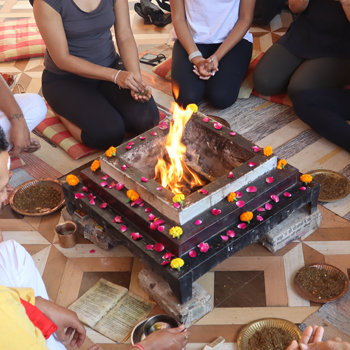

What Happens During a Havan
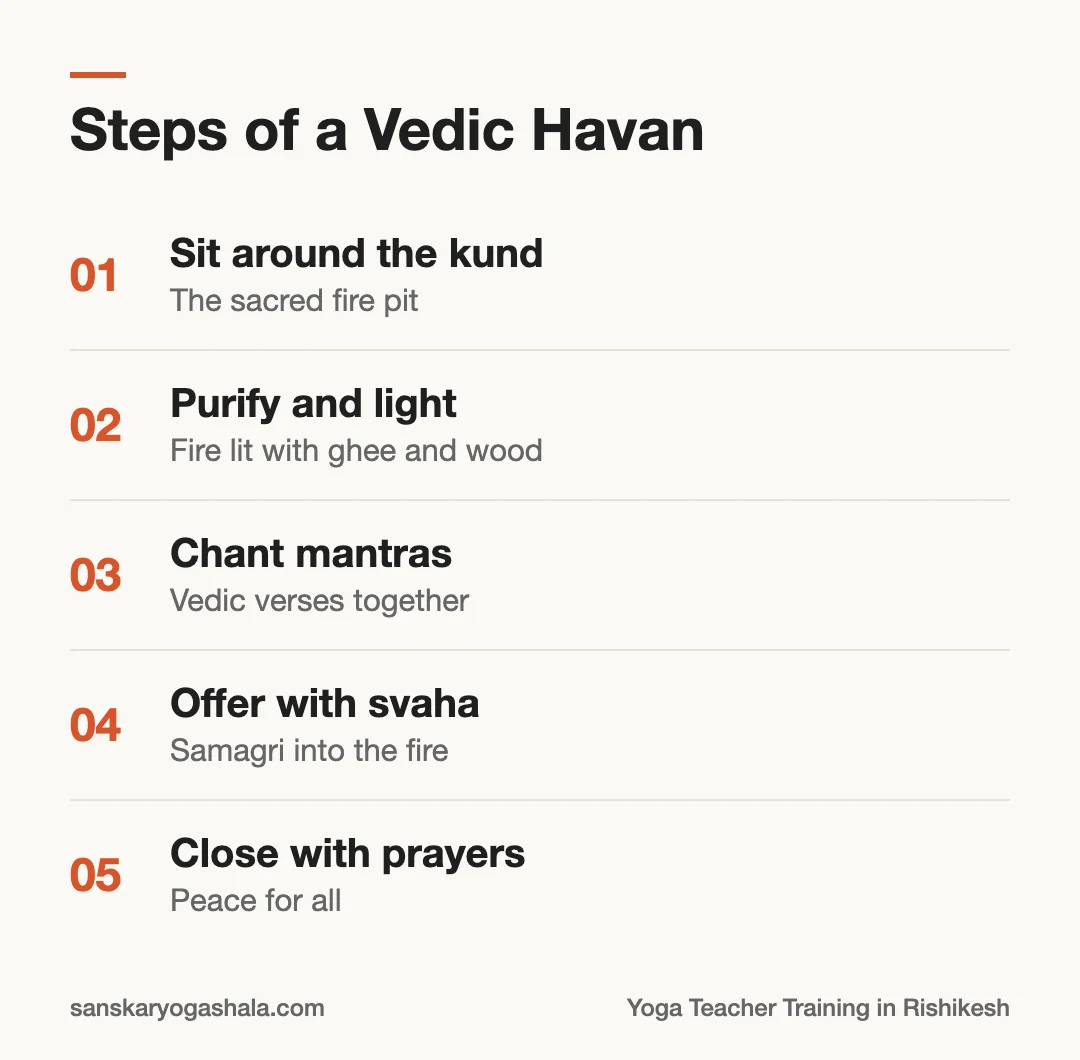
- Participants sit around a small fire pit called a havan kund.
- The priest or teacher purifies the space and lights the fire with ghee and wood.
- Vedic mantras are chanted together.
- At the end of each mantra, everyone offers a small handful of samagri (herbs, grains and seeds) into the fire with the word svaha.
- The ceremony ends with prayers for peace and blessings for all.
The Meaning Behind the Ritual
On a symbolic level, the fire represents transformation. When we offer something into the fire, we let go of what no longer serves us, such as anger, fear or old habits, and invite clarity and positive energy. The fragrant smoke from herbs like camphor and guggul is traditionally believed to purify the air.
Benefits of Taking Part in a Havan
- A deep sense of calm and focus from group chanting
- A feeling of connection with an ancient living tradition
- A meaningful way to mark a new beginning or completion
- Gratitude and positive intention for the path ahead
Havan in Yoga Teacher Training
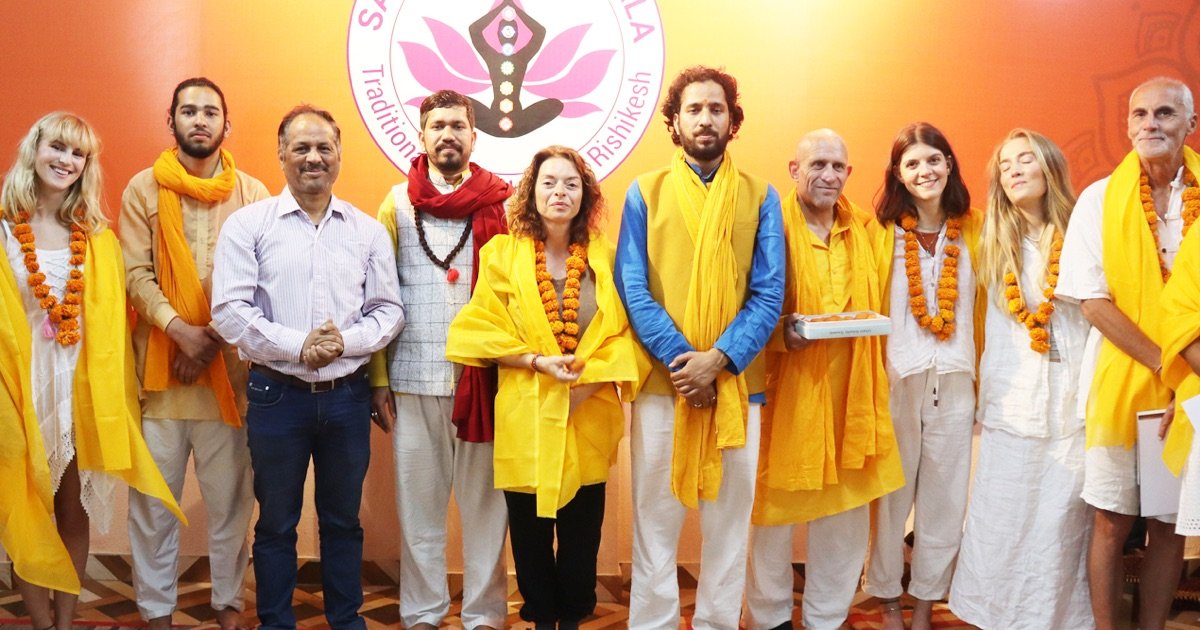
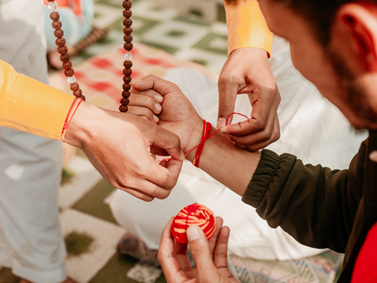
Many traditional schools in Rishikesh open or close their yoga teacher training with a havan. It sets a sacred intention for the course and honours the teachers and lineage that have passed yoga down through generations. For many students, it becomes one of the most memorable moments of their time in India.
Related reading: what a mantra is and what the Vedas are. To study yoga and Vedic traditions in Rishikesh, see our 200 Hour Yoga Teacher Training in Rishikesh.
Havan FAQs
What is a havan?
A havan is a Vedic fire ceremony in which offerings are made into a sacred fire while mantras are chanted, for purification, gratitude and blessings.
What is offered in a havan?
Common offerings include ghee, rice, sesame seeds, dried herbs, wood and a fragrant mixture called samagri.
What does svaha mean in a havan?
Svaha is said at the end of each mantra as the offering is placed in the fire. It means something like “I offer this well”.
Can anyone join a havan ceremony?
Yes. Havan is open to everyone who wishes to take part respectfully, regardless of background or religion.
Why is havan performed at yoga schools?
Schools often hold a havan at the start or end of a course to set a sacred intention and honour the yoga tradition.