Ujjayi pranayama, often called ocean breath or victorious breath, is a breathing technique in which you gently narrow the throat so the breath makes a soft ocean-like sound. It slows the breath, calms the mind, builds focus and warms the body. It is widely used in Ashtanga and Vinyasa yoga.
Ujjayi pranayama also is known as ujjayi breathing technique is a lot like the bhastrika pranayama with a slight involvement of contraction or constriction of the voice box by the practitioner. If you have been practicing bhastrika pranayama then performing this pranayama involves only this particular aspect of the voice box or larynx constriction by the practitioner. The name ujjayi has various meanings in Sanskrit, in the simplest terms it is known as “victorious” or “victorious breathing” and as general “ Ujjayi” means “ ocean sounding breath”.
This simile of ocean sound has been derived from the fact that the passage of air through the constricted voice box feels and sounds like the consistent and sustained sound of the oceans if one stands on the coast and tries to hear it. Similarly, the practitioner contemplates similar ocean sound practicing this Pranayam. Let’s have a look at the various steps involved in doing this particular pranayama.

Ujjayi pranayama
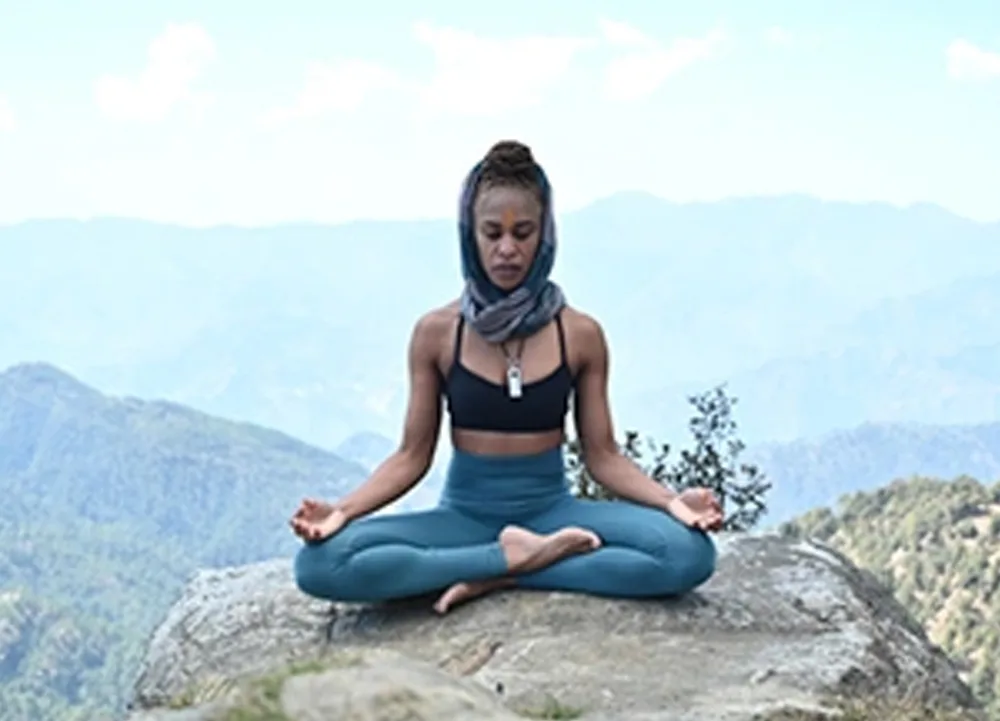
First of all, be in a comfortable and still seated posture and check for the clarity and smooth airflow within the nasal passages.
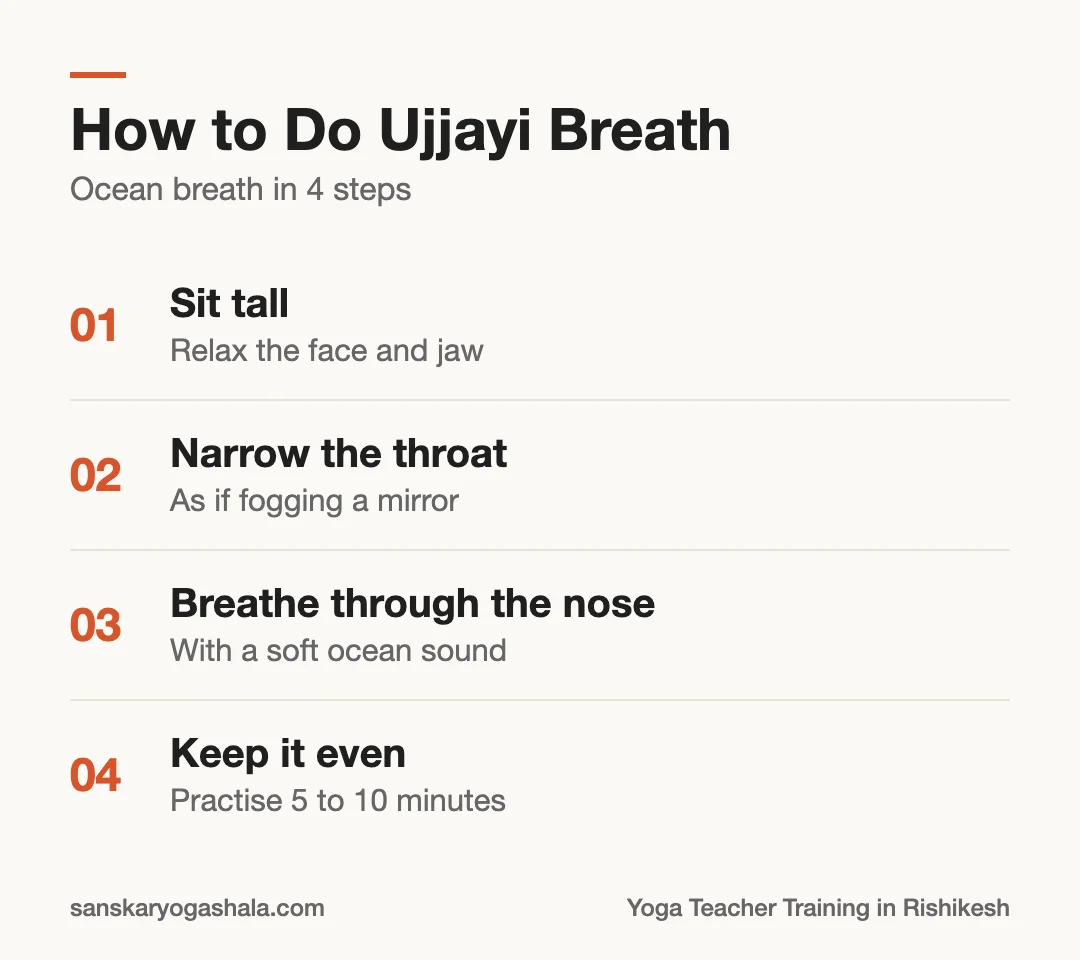
Next deeply inhale and exhale so that the breathing process is smooth and a relaxed and composed preparation for ujjayi pranayama is done. Now once you are ready for inhalation try and constrict your larynx (voice box) as if trying to push it to the back of your neck. Don’t force and do it as per your capacity and then begin the inhalation. As you continue to inhale the constricted voice box issues a light noise or sound just like the sound of the ocean.
Inhale deeply and continue until no more air can be inhaled. Take a brief pause and then continue the exhalation as normal releasing the voice box back to rest again deeply as per your capacity until there is no more air which can be breathed out.

Now you can begin the next cycle similarly by inhaling while constricting the voice box and exhaling normally keeping the voice box relaxed. This practice is actually an extension of the bhastrika pranayama where the only modification is the constriction of the voice box while inhaling. Some practitioners practice this voice box constriction with the help of JALANDHAR BANDH (neck lock). The primary precautions are that no undue efforts or force is required for performing this constriction of voice box rather slowly and steadily with the progression of practicing the constriction becomes more and more perfect and the ocean sound deepens.
The practitioner practices this pranayama with eyes closed and contemplates on the ocean sound which is naturally produced from the voice box. With practice, the practitioner experiences a clearer and deeper ocean sound which is also referred to as victorious breathing. yoga The victorious breathing is again a simile where the vast expansive ocean sound spreads out and is evenly heard like a sound of victory resonating from within the practitioner’s practice of this pranayama.
Ujjayi Meaning
Ujjayi means victorious, from ud (upward) and jaya (victory). It is the breath that helps you rise above distraction and stay focused.
Benefits of Ujjayi Breath
- Calms the nervous system and reduces stress
- Improves focus during asana practice
- Builds gentle internal heat
- Slows the breath and supports lung capacity
- Helps with sleep when practised slowly
Common Mistakes
- Squeezing the throat too hard so the breath sounds harsh
- Breathing through the mouth
- Making the inhale and exhale uneven
- Forcing a long breath and feeling breathless
Who Should Be Careful
Ujjayi is safe for most people. Those with low blood pressure should practise gently. Practise it alongside other techniques like Anulom Vilom and Bhramari, and read our guide to pranayama for more.
Ujjayi in Daily Practice
You can use Ujjayi in seated practice, during slow flowing sequences or as a short calming break at work. Keep the sound soft enough that only you can hear it. If the breath feels strained, stop, breathe normally and start again more gently.
Related breathing practices: Bhramari pranayama and what pranayama is. Daily pranayama practice is part of our 200 Hour Yoga Teacher Training in Rishikesh.
Ujjayi Pranayama FAQs
What is Ujjayi pranayama?
Ujjayi is a breathing technique in which the throat is gently narrowed so the breath makes a soft ocean sound.
Why is it called ocean breath?
The gentle sound in the throat sounds like waves in the ocean.
Can I do Ujjayi during asana practice?
Yes. Ujjayi is often used throughout Ashtanga and Vinyasa classes to keep the breath steady.
How long should I practise Ujjayi?
Start with 5 minutes and slowly build up to 10 or 15 minutes.
Is Ujjayi good for anxiety?
Yes. Slow Ujjayi breathing calms the nervous system and can help reduce anxiety.