Pranayama is the yogic practice of controlling and expanding the breath. The word joins prana (life force) and ayama (extension or control). Through slow, conscious breathing techniques, pranayama calms the nervous system, improves lung capacity and prepares the mind for meditation. It is the fourth of the eight limbs of yoga.
Pranayama Another of the most well known practises of yoga pranayama is truly the heart of yoga if not less. It might seem a very easy going and generally, still, it is one of the most in-depth procedures for any practitioner where the focus is of course on breathing. Breathing has two basic processes inhaling and exhaling but Pranayama will help you understand that there are few more steps to breathing. The emptiness of breath before inhalation, the holding of breath once inhaled and the emptiness of breath once exhaled is the other procedures of breathing which one realises.
Yoga Pranayama
The word Pranayama is made up of two words namely PRANA + AYAM, the first word is again very deep but for now, you can understand it as breath and the second one is rather simple which means extension. Hence means breath extension. The technique of aims at deepening and extending the whole breathing cycle. Hence your inhalation capacity and time is extended as is your exhalation time and capacity. Pranayama Add to it the third most important breathing process holding the breath which also undergoes the same extension and increase in capacity.

This practice of prana involves your mind to the maximum while the body rather rests and stays in a relaxing and composed posture. The process has been broken down into three sub-parts known as PURAK – KUMBHAK-RECHAK ( inhaling-holding-exhaling) all done with depth and in the most gentle manner. There is no undue effort or force while doing these procedures and whatever inhalation, exhalation, or holding the body can do is done as per the respective capacities of the practitioner. Once the practitioner indulges in the practice of pranayama very soon their vital capacities and durations will be enhanced as the practice becomes more and more deep and soothing.

The whole focus of pranayama practice is on breath and there are at least 13 types of pranayama we find in practice. The most important practice is that of ANULOM-VILOM or NADI SHODHAN( purification of nervic channels) which means alternate nostril breathing. While practicing pranayama the key indicators are that no shiver, sweat or uneasiness must be felt while practicing it. Any of the above if appearing indicates failure of proper practice more preparation is needed before attempting it. works on the most vital element residing within our body and can be said as the seat of our human potential.
Pranayama Meaning in Yoga
In yoga, the breath is the bridge between the body and the mind. When the mind is anxious, breathing becomes fast and shallow. When the mind is calm, breathing becomes slow and deep. Pranayama uses this link the other way round: by changing the breath, we change the state of the mind. Learn more about the life force itself in our guide to the meaning of prana.
The Three Parts of Pranayama
- Puraka: inhalation
- Kumbhaka: breath retention, holding the breath in or out
- Rechaka: exhalation
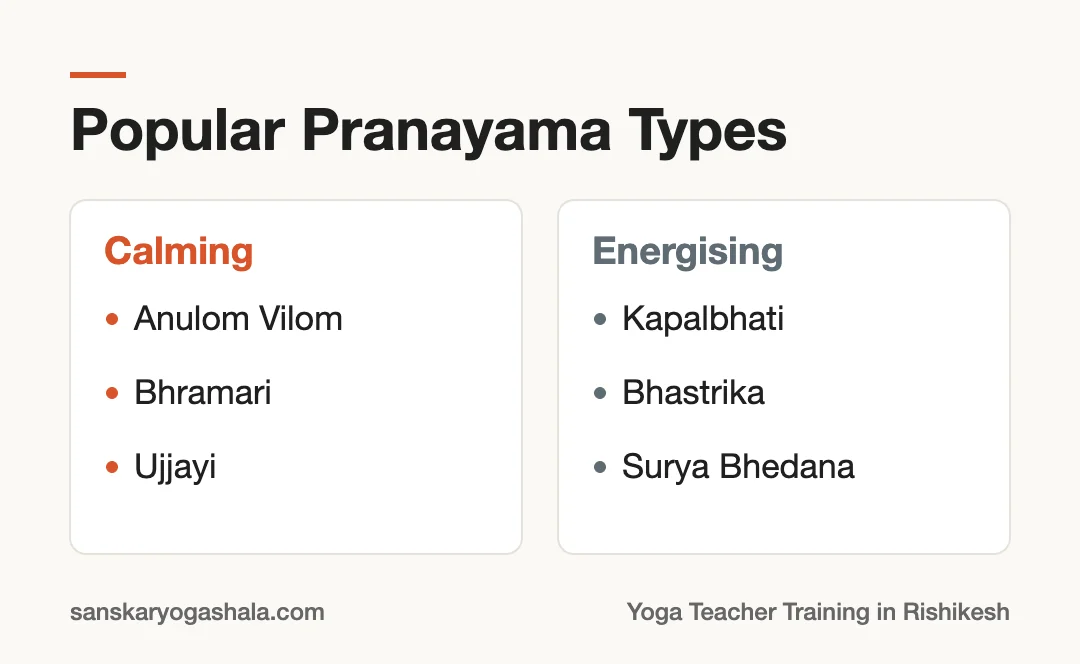
Popular Types of Pranayama
- Anulom Vilom: alternate nostril breathing for balance and calm
- Kapalbhati: skull-shining breath that cleanses and energises
- Bhastrika: bellows breath for heat and energy
- Bhramari: humming bee breath to relax the mind
- Ujjayi: ocean breath for focus and steadiness
Benefits of Pranayama
- Reduces stress and anxiety
- Improves lung capacity and breathing efficiency
- Supports better sleep
- Improves focus and concentration
- Balances energy levels
- Prepares the mind for meditation
Pranayama Tips for Beginners
- Practise on an empty stomach, ideally in the morning.
- Sit with a straight spine in a comfortable position.
- Breathe through the nose unless a technique says otherwise.
- Start with gentle techniques and short sessions of 5 to 10 minutes.
- Never force the breath. Stop if you feel dizzy.
- Learn strong techniques and breath retention from a qualified teacher.
Pranayama FAQs
What is pranayama in simple words?
Pranayama is the yogic practice of controlling the breath through special breathing techniques to calm the mind and energise the body.
What is the best time to do pranayama?
Early morning on an empty stomach is the best time. Evening practice is also fine if you wait two to three hours after eating.
How many types of pranayama are there?
There are many types. Popular ones include Anulom Vilom, Kapalbhati, Bhastrika, Bhramari, Ujjayi, Sheetali and Surya Bhedana.
Can beginners do pranayama?
Yes. Beginners should start with gentle techniques such as deep breathing and Anulom Vilom and avoid long breath retention.
How long should I practise pranayama daily?
Start with 5 to 10 minutes a day and slowly increase to 20 or 30 minutes as you become comfortable.