Yoga can play a useful supporting role during and after illnesses like COVID-19. Gentle asana, breathing practices and meditation help keep the body active, support healthy lung function, lower stress and improve sleep. Yoga is not a treatment for the virus, but it is a safe, natural way to support overall health and recovery alongside medical advice.
COVID 2019 Many of us want to know that is there any cure for the deadly COVID 2019 CORONA virus. The answer is simply yes. There might be no vaccine yet but we must not forget that CORONA virus feeds on your lower immunity levels and then infects the respiratory system to degenerate it. COVID 2019 Well, there is good news for all the yoga practitioners out there, yogic practice is actually one of the routines and practices which offers you some of the other boost preventing the outbreak of this virus within your body.

Yoga Covid 19 Yoga Practice & Covid 2019
Any pathogen or viral organism tends to reside within our mucous. The yogic cleansing process of nasal cleansing and kapala bhati which all of us know are most commonly practiced to clear any thick mucus or nasal blockage helps in removing any such pathogen beforehand. Hence the very first process of yogic practice cleansing offers a respite from any infection of this kind. Secondly, even if you haven’t contracted the virus as such still being practitioners your immunity levels will remain all charged up hence leave aside viral any type of pathogen won’t find its way through your well seasoned and practice hardened body.

The practice of pranayama (breath extension) in itself has both physical and mental benefits when we talk about mental and physical health status. Breath extension increases the vital capacity of the lungs and stretches and relaxes it, unlike any other exercise we do. Not to mention the mental calm and composure the practice of pranayama provides you with along with the physically enhanced lung capacity. The practice of pranayama is again providing the respiratory boost and tremendous energy to the whole respiratory mechanism. What more to say the yoga practice can combat and defeat coronavirus infection both physically and mentally. The yogic practitioner can combat any illness with his/her infinite joy and fearlessness.
How Yoga Supports Health During a Pandemic
- Keeps the body moving: regular asana maintains strength and flexibility when daily activity drops.
- Supports breathing: gentle pranayama encourages full, deep breaths and good use of the lungs.
- Reduces stress: long-term stress weakens the body, and yoga helps calm the nervous system.
- Improves sleep: relaxation and breathing practices make it easier to rest well.
- Lifts mood: meditation and community practice help with fear, isolation and low mood.
Breathing Practices That Help
Simple, gentle techniques are best, especially if you are recovering from illness:
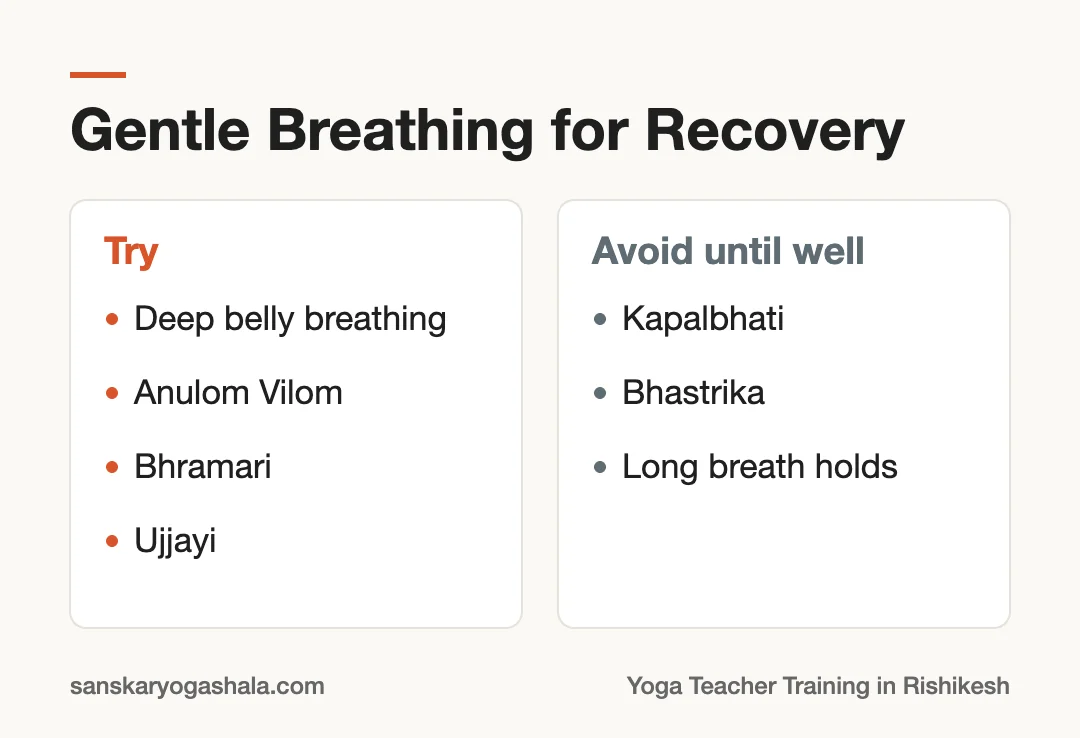
- Deep belly breathing: slow inhalations into the abdomen and long exhalations.
- Anulom Vilom: alternate nostril breathing to calm and balance.
- Bhramari: humming bee breath to relax the mind.
- Ujjayi: a soft, steady breath that slows breathing down.
Avoid strong practices like Kapalbhati and Bhastrika until you have fully recovered and your doctor agrees.
Yoga for Recovery After COVID
Many people feel tired, breathless or low for weeks after an infection. A gentle, patient approach works best: short sessions, restorative poses, plenty of rest and slow breathing. Increase your practice step by step and stop if you feel dizzy, short of breath or unwell. Always follow your doctor’s advice first.
Building a Healthy Routine for the Future
The pandemic reminded us that good health is built daily. A consistent routine of movement, breathwork, nourishing food, good sleep and a calm mind is one of the best investments you can make. Even 20 minutes of yoga a day can make a real difference over time.
Learn Yoga Safely With Expert Guidance
If you want to build a deeper, safer practice for long-term health, learning from experienced teachers makes a real difference. Our 200 hour yoga teacher training in Rishikesh covers asana, pranayama, anatomy and meditation in depth, so you can care for your own health and guide others with confidence.
Related reading: Corona lockdown: a yogic opportunity and how to do Anulom Vilom pranayama. To build a steady daily practice, see our 200 Hour Yoga Teacher Training in Rishikesh.
Yoga and COVID FAQs
Can yoga cure COVID-19?
No. Yoga is not a treatment for COVID-19. It can support general health, breathing and stress management alongside proper medical care.
Which pranayama is good for the lungs?
Gentle techniques such as deep belly breathing, Anulom Vilom, Bhramari and Ujjayi are good choices for supporting healthy breathing.
Is it safe to do yoga after COVID?
Gentle yoga is usually safe once you have recovered, but start slowly and check with your doctor, especially if you still feel breathless or tired.
How does yoga help with anxiety during a pandemic?
Breathing and meditation calm the nervous system, reduce racing thoughts and help you feel more grounded and in control.
How long should I practise yoga each day?
Start with 15 to 20 minutes a day of gentle movement, breathing and relaxation, and build up as you feel stronger.