The Upanishads are ancient Indian texts that form the philosophical heart of the Vedas. They explore the deepest questions of life: who am I, what is the world, and what is the ultimate reality, Brahman. Their wisdom was passed down through the guru-shishya parampara, the tradition of teaching from teacher to student, and it still guides yoga philosophy today.
UPANISHAD( UP = sitting near NISHAD = the feet of the teacher) again as the beauty of Sanskrit language is the great extant literature of vedant philosophy. The Upanishads are the shining jewels of Indian culture and tradition which needs no introduction. Starting first chronologically Upanishads are part of one of the six orthodox schools of philosophy known as SHATH DARSHAN. It comes under VEDANT (the essence of Vedas) and interestingly apart from various Yoga schools of knowledge it deals with it has stories where sages and scholars continuously interact in form of dialogues and discussions where the basic ideology is that the thirsty pupil approaches
Yoga What are Upanishads: The Guru-Shishya Parmapara
In total there are 24 such divines, spiritual and extremely conclusive stories of heroic scholars, knowledgeable kings and renunciate sages in a plethora of themes and ways. These stories are found in the principle Upanishads, the first and oldest of Upanishads are 11 principle Upanishads. They are as follows:
1. ISHOPANISHAD (ISHA = eternal supreme god)
2. KENOPANISHAD (KEN = that and how)
3. PRASHNOPANISHAD (PRASHN = questions)
4. MUNDAKOPANISHAD (MUNDAKA = as clear as a shaven head)
5. MANDUKYOPANISHAD (MANDUKYA = As still as a FROG (Yoga’s Frog posture)
6. CHHANDOGYOPANSIHAD (CHHANDOGYA = poetic and syllabic)
7. BRIHADARANYAK UPANISHAD (BRIHADARANYAK = Great wilderness of thought)
8. TAITREYA UPANISHAD (TAITREYA = partridge bird)
9. KATHOPANISHAD (KATH = inscribed on a wooden tablet)
10. AITREYOPNISHAD (AITREYA = by AITREYA MAHIDAS, the complier)
11. SHWETASHWATAROPNISHAD (SHWETASHWATAR = bearer of the white horse)
Upanishad tales are the shining gems of universal philosophy while Upanishad establishes the fundamental concepts of ATMA ( true self, the soul), AHAMKAR ( self we know) and PARAMATMA ( the supreme soul).
What Are the Upanishads?
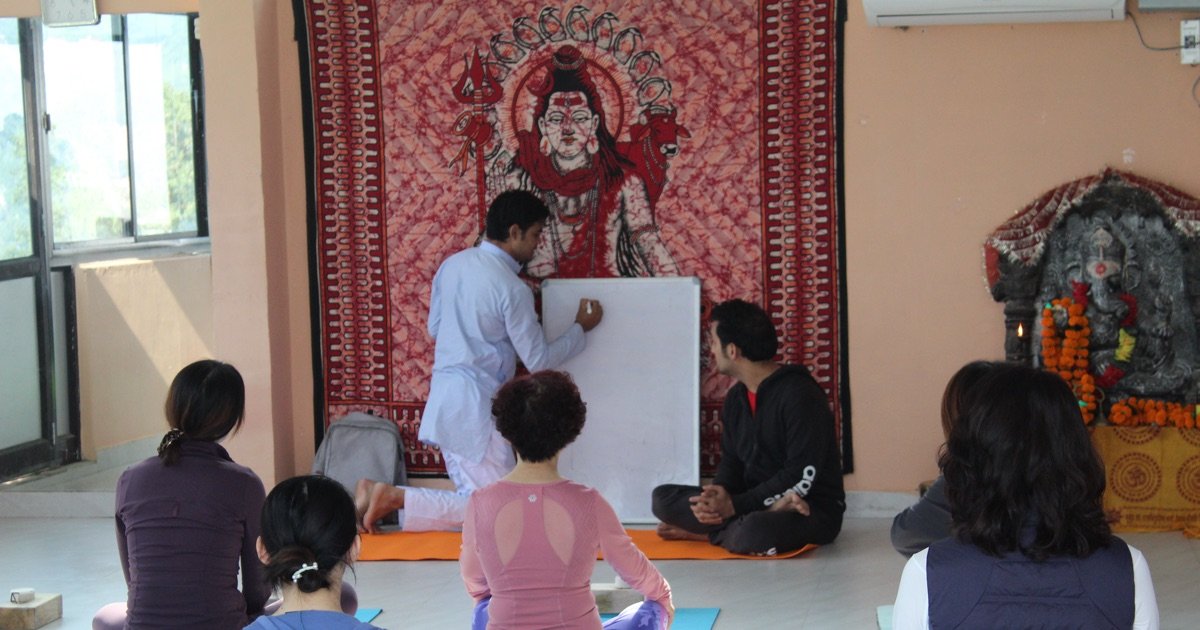
The word Upanishad is often explained as upa (near), ni (down) and shad (to sit): to sit down near the teacher. This shows how the teachings were shared, in small, intimate groups where a student sat close to a realised master and listened.
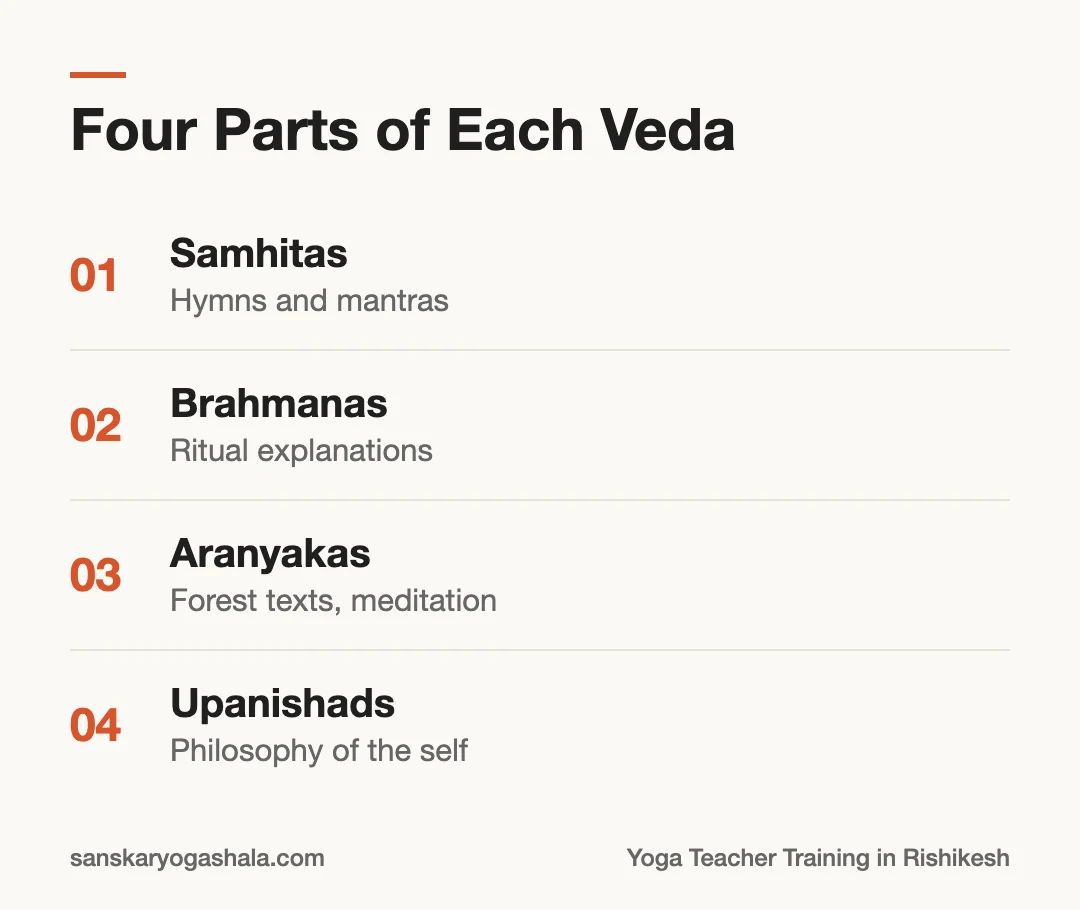
The Upanishads come at the end of each Veda, which is why they are also called Vedanta, “the end of the Vedas”. Over 200 texts carry the name, but tradition names around 10 to 13 as the principal Upanishads, including the Isha, Kena, Katha, Mundaka, Mandukya, Chandogya and Brihadaranyaka. Read more about their source in our guide to what the Vedas are.


Key Teachings of the Upanishads
- Atman and Brahman: the true self (Atman) is one with the ultimate reality (Brahman).
- Tat tvam asi: “you are that”, the idea that your deepest self is not separate from the whole.
- Om: the Mandukya Upanishad explains Aum as the sound of the whole of existence.
- Five koshas: the Taittiriya Upanishad describes the five layers of the self.
- Karma and rebirth: actions shape our future until we realise our true nature.
What Is the Guru-Shishya Parampara?
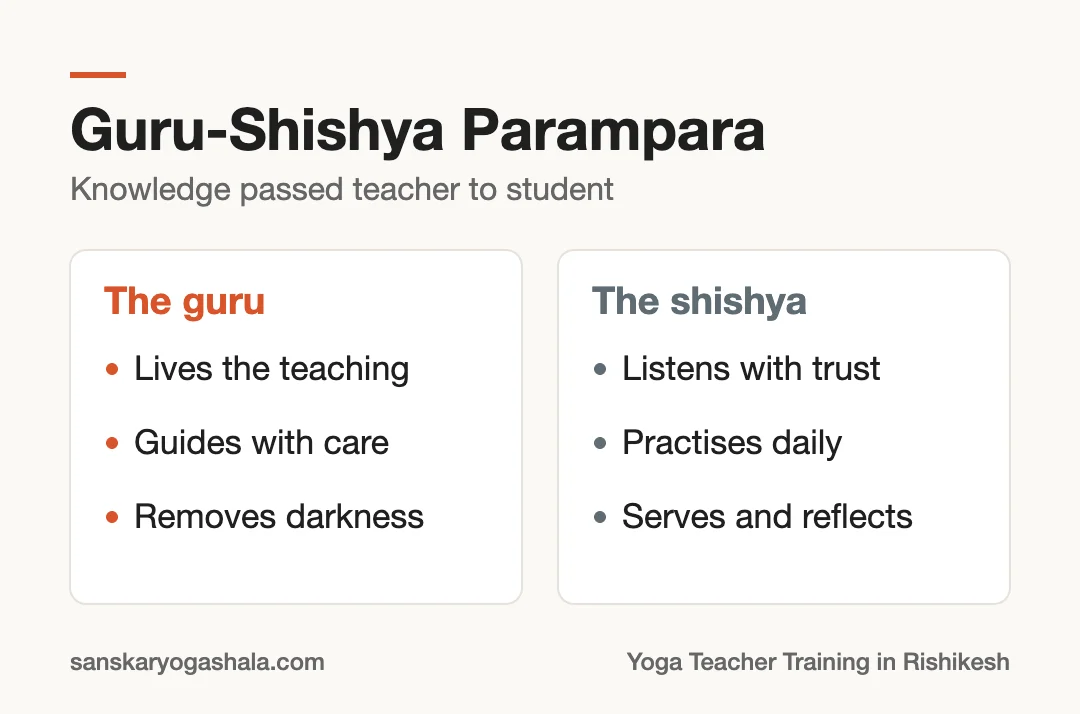
Guru means teacher, shishya means student and parampara means an unbroken line or tradition. For thousands of years, knowledge of yoga, the Vedas and the Upanishads was passed orally from guru to shishya. The student lived with the teacher, served them and learned not only from words but from the teacher’s example.
This relationship was built on trust, humility and dedication. The guru shared knowledge only when the student was ready, and the student kept the teaching alive by passing it on in turn.
Why the Upanishads Matter to Yoga Students
Modern yoga often focuses on postures, but its roots lie in the philosophy of the Upanishads. Understanding them adds depth to every practice. Concepts like prana, the koshas, meditation on Om and the search for the true self all come from these texts. Many yoga teacher training courses in Rishikesh include them in their philosophy classes.
How to Start Reading the Upanishads
- Begin with a short text such as the Isha or Katha Upanishad.
- Choose a translation with a simple commentary.
- Read slowly, a few verses at a time, and reflect on them.
- Discuss what you read with a teacher or study group.
Related reading: what the Vedas are and the meaning of Aum (Om). Yoga philosophy is part of our 200 Hour Yoga Teacher Training in Rishikesh.
Upanishads FAQs
What are the Upanishads in simple words?
They are ancient Indian philosophical texts at the end of the Vedas that explore the nature of the self, the universe and ultimate reality.
How many Upanishads are there?
More than 200 texts are called Upanishads, but tradition usually counts 10 to 13 as the principal ones.
What is the main teaching of the Upanishads?
The central teaching is that the individual self (Atman) is one with the ultimate reality (Brahman).
What does guru-shishya parampara mean?
It means the tradition of passing knowledge directly from teacher (guru) to student (shishya), in an unbroken line over generations.
Are the Upanishads related to yoga?
Yes. Many ideas central to yoga, such as Om, prana, the koshas and meditation on the true self, come from the Upanishads.