A meditation retreat in Rishikesh is a quiet stay in the Himalayan foothills where you practise meditation every day, guided by experienced teachers. Through simple techniques like breath awareness, mantra and silent sitting, you learn to calm a busy mind, reduce stress and build a meditation habit you can continue at home.
Weekly Meditation Retreat in Rishikesh , India
Meditation is a precise technique for relaxing and concetrating the mind while attaining a state of thoughtless consciousness which is completely different from the normal awakened state. Meditation Retreat in Rishikesh Through meditation we can dive deep into the various levels of consciousness. It is a completely non religious practice and science of the mind which follows a proper order having definite principles and produces results that have been verified from time to time.

During meditation the mind is clear, relaxed, and inwardly focused. When you meditate, you are fully awake and alert, Meditation Retreat in Rishikesh but your mind is not focused on the external world or on the events taking place around you.
Duration: 7 Days
Cost: 350 US$ (Including fee accommodation share room, Ayurvedic 3 Meals a day breakfast, lunch, dinner, tea, Library.)
What Happens on a Meditation Retreat in Rishikesh?
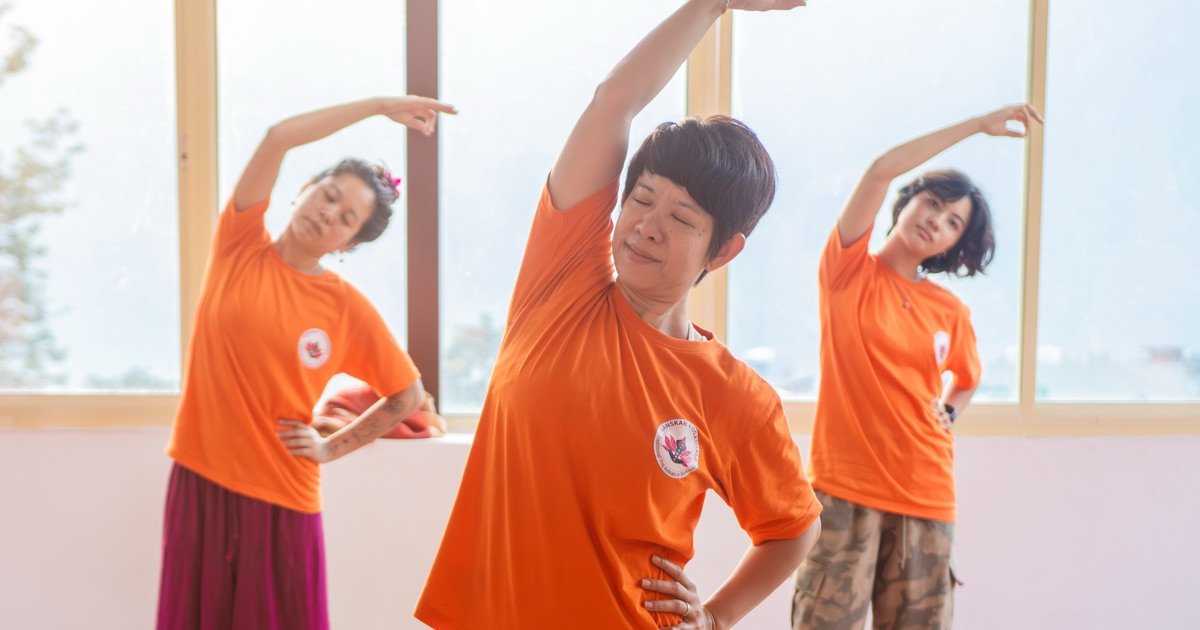
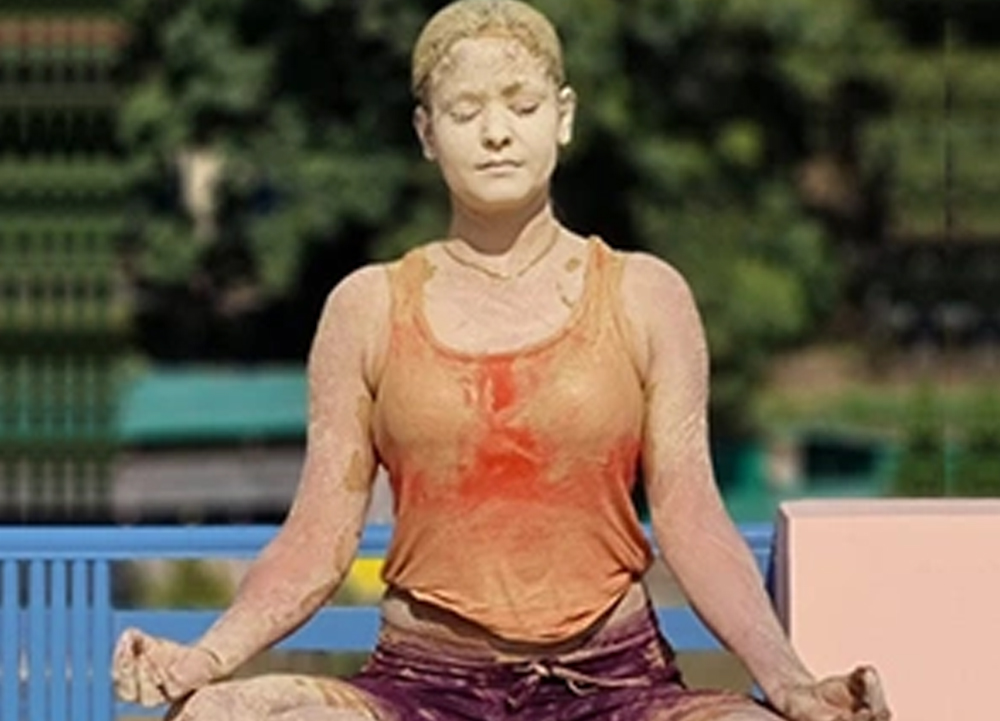
A meditation retreat is not about escaping life. It is about learning to be fully present with it. Days usually follow a gentle rhythm that combines guided meditation, yoga, breathing practice, healthy food and time for rest and reflection. Some periods may be spent in silence so the mind can settle naturally.
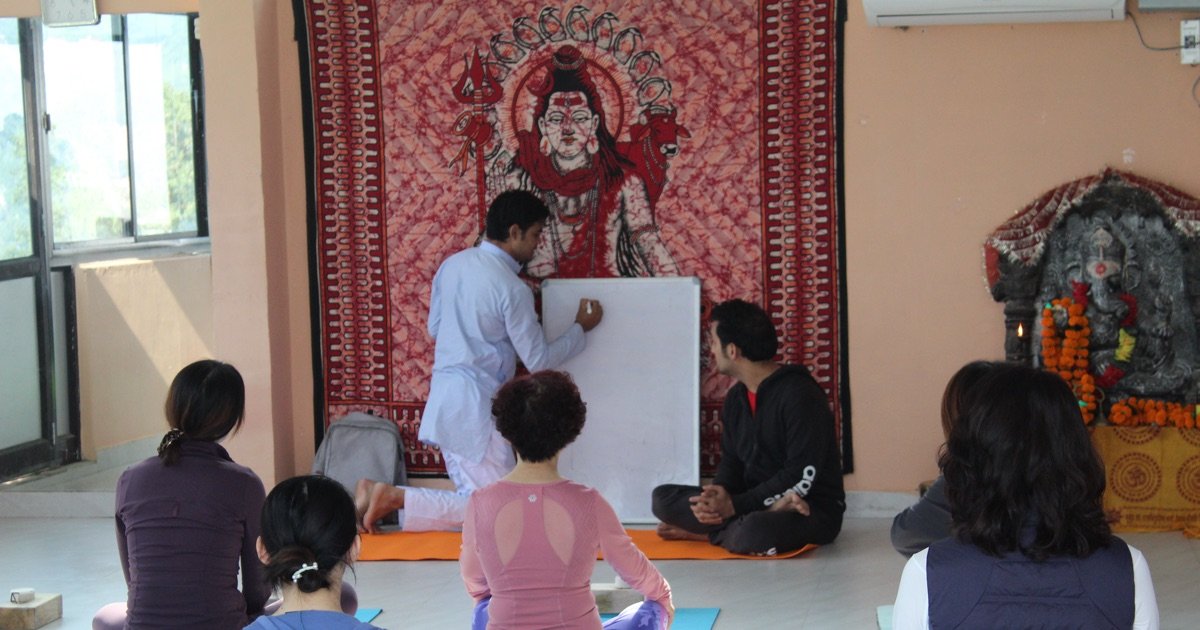
You do not need any experience. Teachers start with short sittings and simple techniques, then slowly help you sit longer with more ease.
Meditation Techniques You Will Learn
- Breath awareness: watching the natural flow of the breath to anchor the mind.
- Mantra meditation: repeating a sacred sound such as Om to focus attention.
- Body scan and relaxation: releasing tension from head to toe, often through yoga nidra.
- Trataka: steady gazing at a candle flame to build concentration.
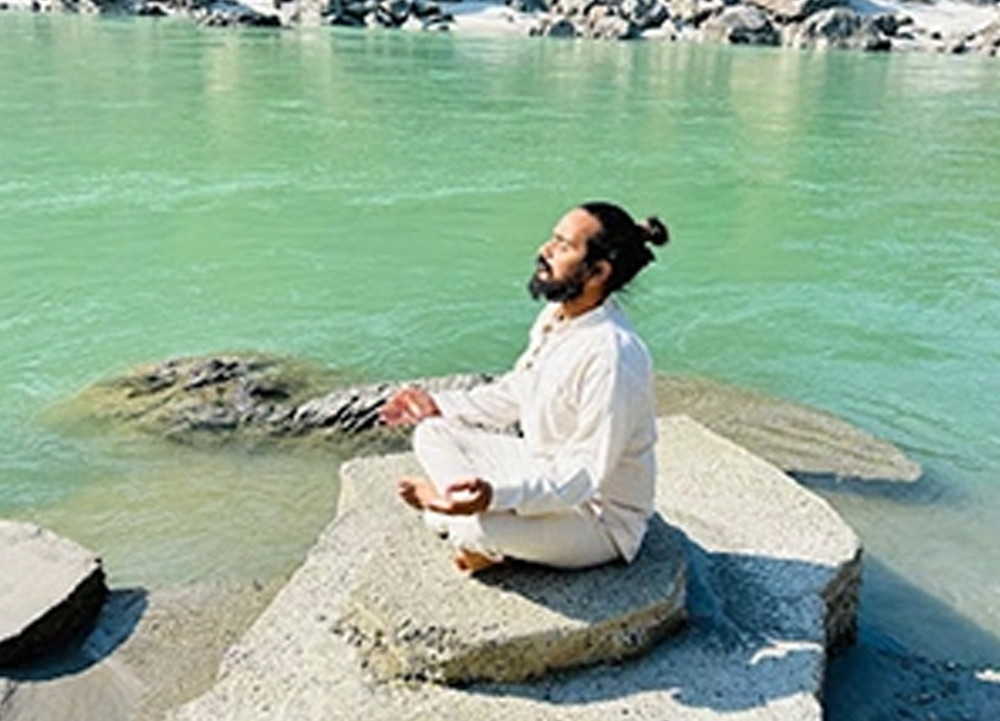
- Walking meditation: bringing mindful attention into movement, for example along the Ganga.
Benefits of a Meditation Retreat
- Less stress, worry and mental noise
- Better sleep and more stable moods
- Improved focus, memory and creativity
- Greater self-awareness and emotional balance
- A daily practice that keeps working long after the retreat ends
Why Choose Rishikesh for a Meditation Retreat?
For thousands of years, sages have come to Rishikesh to meditate on the banks of the Ganga. The town still carries that peaceful energy. Mountain air, temple bells at dawn and evening aarti by the river all support a quieter mind. Away from the noise of city life, it becomes much easier to turn inward.
How to Prepare for Your Meditation Retreat
- Start sitting for 5 to 10 minutes a day before you arrive.
- Reduce caffeine, screens and late nights in the week before.
- Bring comfortable, modest clothes and a light shawl for early mornings.
- Arrive with an open mind and without fixed expectations.
- Plan a simple way to continue practising when you return home.
If you want to understand the theory behind meditation, read what meditation actually means before you come.
A Typical Day on a Meditation Retreat
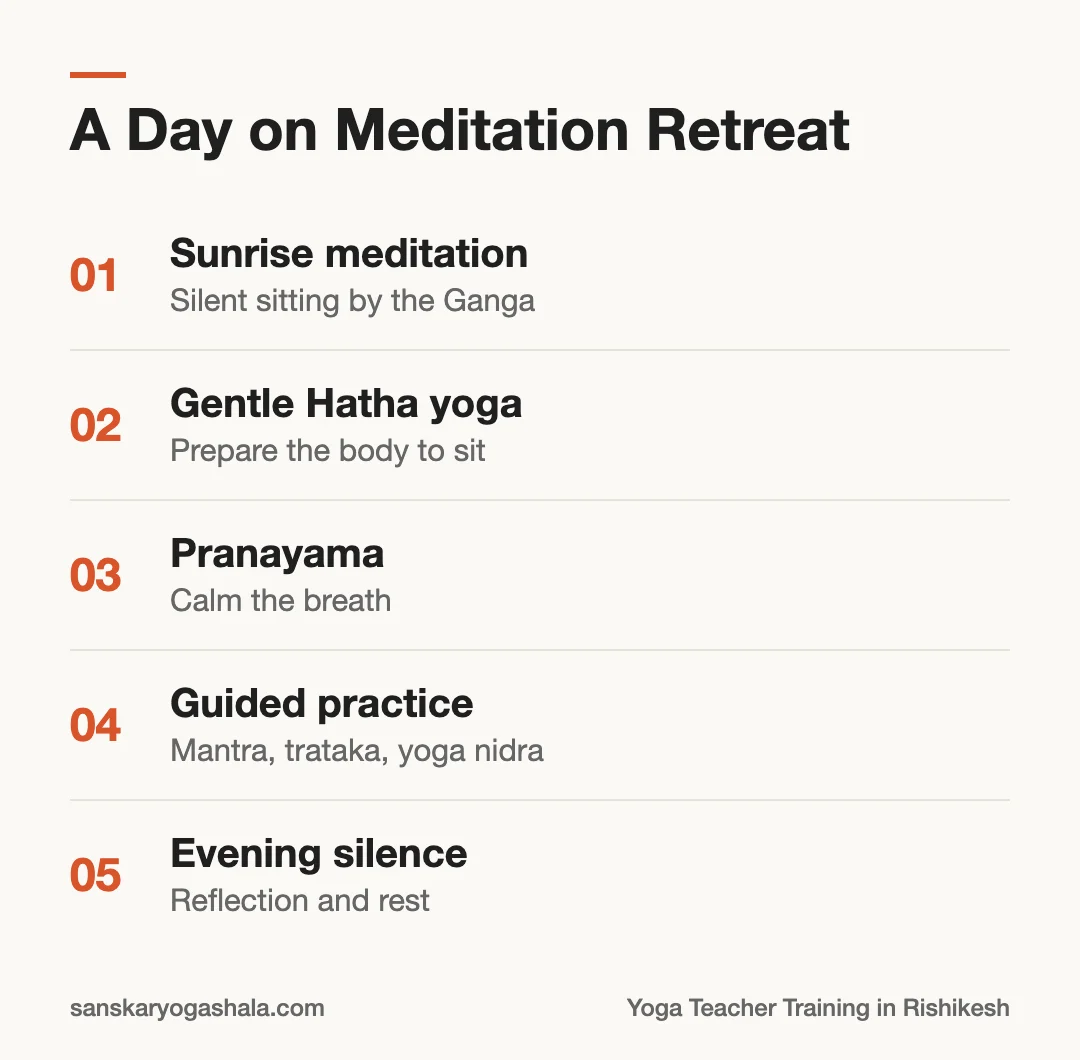
Every retreat is a little different, but most days follow a calm and simple rhythm that helps the mind settle:
- Early morning: wake before sunrise, herbal tea, then gentle pranayama and a first guided meditation.
- Morning: a mindful yoga class to release stiffness, followed by a nourishing sattvic breakfast.
- Midday: a short talk on meditation or yoga philosophy, lunch and quiet rest.
- Afternoon: walking meditation, journaling or free time by the Ganga.
- Evening: a final sitting, mantra chanting or yoga nidra, then an early night.
This steady routine removes the need to make many small decisions. With fewer distractions, you start to notice your thoughts more clearly and learn to let them pass without getting caught in them.
How to Keep Meditating After the Retreat
The real test of a retreat is what happens when you go home. Choose a fixed time each day, even if it is only 10 minutes. Sit in the same place, use the same technique you learned, and be kind to yourself on days when the mind is busy. Small, regular practice is far more powerful than long sessions now and then.
Meditation Retreat FAQs
Do I need meditation experience to join a retreat?
No. Retreats welcome complete beginners. Teachers guide you step by step, starting with short and simple practices.
Will I have to be silent the whole time?
Not usually. Many retreats include some periods of silence to help the mind settle, but you can still ask questions and talk with teachers.
What is the best time of year for a meditation retreat in Rishikesh?
October to April is generally the most comfortable time, with pleasant days and cool mornings. The monsoon months of July and August are very wet.
What should I bring to a meditation retreat?
Bring comfortable, modest clothing, a shawl or light jacket, a water bottle, a notebook and any personal medicines.
How will a meditation retreat help me?
Most people leave feeling calmer, more focused and better rested, with a clear daily routine they can continue at home.