Meditation is the practice of training the mind to rest in steady, calm awareness. In yoga, meditation (dhyana) is an unbroken flow of attention towards one point, such as the breath or a mantra. It is not about stopping thoughts by force, but about letting the mind settle so you can see clearly.
You might be waiting for this article for quite some time and we have been waiting to write it down pretty much to ease your curiosity in the way as it is. Many of us or almost all of us are aware of the practice of meditation or commonly known as peaceful concentration. In the yogic tradition, the word used is DHYAN, which has similar meaning and sense but with a very specific twist. DHYAN means to contemplate on one and only one topic or subject.
Seems pretty simple but it is rather something very –very tough to do at once. For example, reading a book is easy; you can concentrate on the matter and go on doing it for any length of time but consider meditation or DHYAN like reading a book and only doing it nothing else. This means while you read it you can neither sense anything else, feel anything else or in other words, you are aware of nothing but only reading the book in hand. All of your minds, senses, and efforts are doing only one thing and hence making the most out it which any normal reader won’t.
Yoga Meditation
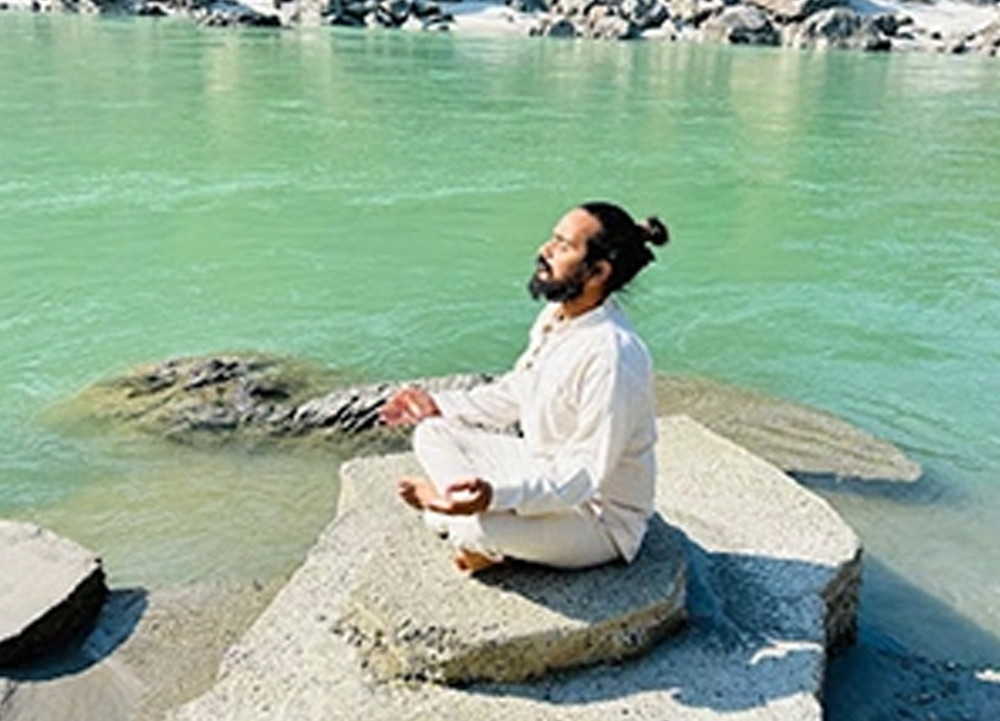
This seems a bit hypothetical but is actually true. You might have seen yogic meditation where someone sits down eyes closed in a relaxed pose, actually meditation is happening only when you cannot sense one thing going around you, nor feel it and the only thing which you can completely identify is one single subject which you have focussed upon. For starters, yogic tradition teaches us to focus on your breath since that is one process easy to contemplate and a process which can be felt to undergo changes as it progresses.

Once you start concentrating on your breathing sitting down eyes closed, after all the irritation and disturbances here and there you begin to experience the stillness and calm and slowly you can only begin to the feel nothing but your breathing. This way all you’re mental and physical attention is only on breathing and likewise, you can also start to feel it deepen. Not to mention among disturbances the various thoughts and feelings of the weeks and days gone by appearing but once you are determined to concentrate and meditate only on your breathing they soon slip away.

Furthermore as time passes (which you would feel to pass quite slowly) you can feel the most subtle element of your breath and as all of your efforts and energy are focused on only that a feeling of exceeding calm and happiness surround you, that is when you are in a suitable state of meditation as per yoga. This simple short description is a sure experience of meditation as once you practice you would definitely experience it. DHYAN is the ultimate tool of cleansing and washing out thoughts and mind as a whole, and of course, it needs a lot of preparation and practice.
Meditation Meaning in Yoga
Meditation is called dhyana in Sanskrit and is the seventh of the eight limbs of yoga. It comes after dharana (concentration) and leads to samadhi (complete absorption). Concentration is the effort to hold attention. Meditation is when that attention flows without breaking.

Simple Meditation for Beginners
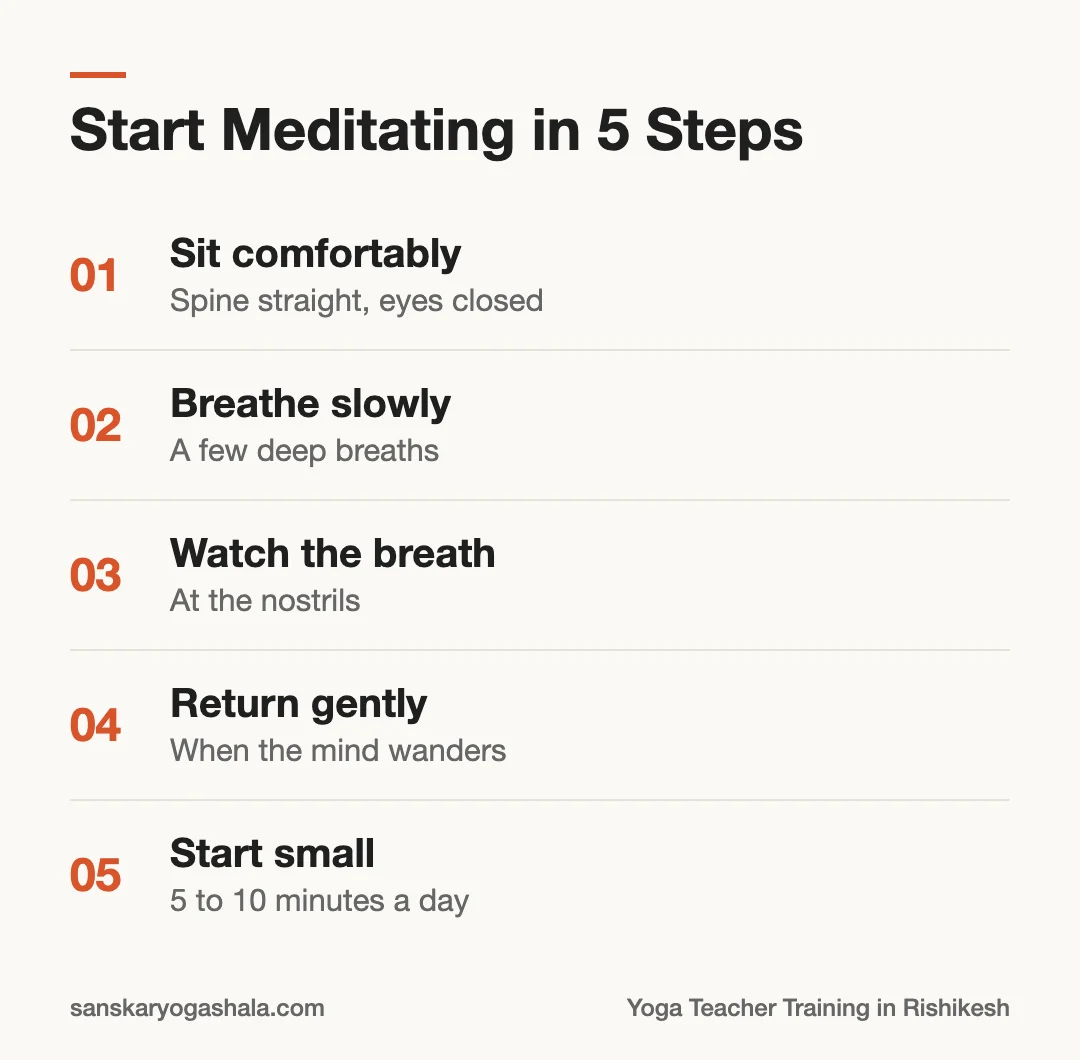
- Sit comfortably with a straight spine.
- Close your eyes and take a few deep breaths.
- Bring attention to the natural breath at the nostrils.
- When the mind wanders, gently come back to the breath.
- Start with 5 to 10 minutes and add a little more each week.
Benefits of Meditation
- Reduces stress, anxiety and overthinking
- Improves focus and memory
- Supports better sleep
- Builds emotional balance and patience
- Brings a deeper sense of peace and self-awareness
Types of Meditation
- Breath awareness
- Mantra meditation, such as chanting Aum
- Trataka, candle-gazing
- Chakra meditation
- Yoga nidra, guided deep relaxation
For deeper guidance, join our meditation retreat in Rishikesh.
Related reading: an introduction to the mind in yoga and what samadhi is. Daily meditation is part of our 200 Hour Yoga Teacher Training in Rishikesh.
Meditation FAQs
What does meditation actually mean?
Meditation is the practice of training the mind to rest in calm, steady awareness, often by focusing on the breath or a mantra.
Is meditation about stopping all thoughts?
No. Thoughts will come. Meditation is about noticing them without getting lost and gently returning to your focus.
How long should a beginner meditate?
Start with 5 to 10 minutes a day and slowly increase to 20 or 30 minutes.
What is the best time to meditate?
Early morning is ideal because the mind is fresh and quiet, but any regular time works.
What is the difference between concentration and meditation?
Concentration is the effort to hold attention on one point. Meditation is when that attention flows steadily without effort.